
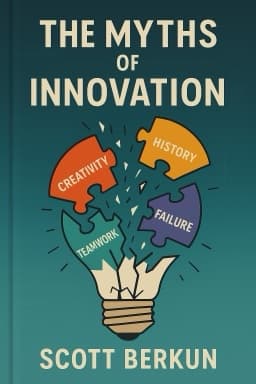
History’s Hidden Hand: How Stories Shape Our View of Innovation
Why the stories we tell about innovation are often incomplete and misleading

When we think about great innovations, we often picture a clean, linear path toward success. But history tells a different story — one full of twists, failures, and forgotten pioneers.
Consider the printing press, which revolutionized knowledge dissemination. Its inventor, however, lived in relative obscurity and financial trouble. Similarly, many ancient tools and inventions were lost or misunderstood for centuries before being rediscovered and celebrated. This delayed recognition reflects how cultural and political contexts influence which innovations are valued.
The selective nature of historical storytelling creates myths of inevitability — as if each innovation was destined to succeed. In truth, many ideas faced rejection, competition, and near extinction. The Roman Coliseum, a marvel of engineering, stands today because it survived fires and rebuilding, while countless other structures crumbled into oblivion.
By critically examining these narratives, we learn that innovation is not a tidy progression but a chaotic, contested process. This realization helps us appreciate the courage and persistence required to push new ideas forward despite opposition.
As we move forward, we will explore why no single method guarantees innovation and how embracing uncertainty is essential for creative success.
Sources: Scott Berkun’s 'The Myths of Innovation' 1 , 3 , 2
Want to explore more insights from this book?
Read the full book summary