
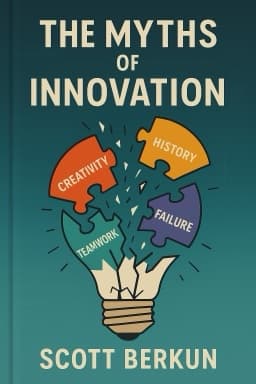
The Shocking Truth Behind Innovation: Why Your ‘Eureka’ Moment Is a Myth
Unveiling the hidden realities of innovation that no one talks about

Innovation is often romanticized as a sudden, magical moment when a brilliant idea flashes into existence. Popular culture loves the story of the lone genius struck by inspiration — think of the iconic tale of an apple falling on a great thinker’s head. But what if this cherished narrative is more myth than reality?
In reality, innovation is a long, winding journey filled with small insights, repeated failures, and persistent effort. Historical evidence shows that many breakthroughs attributed to a single moment were actually the result of years or decades of work. For example, the discovery of gravity was not the result of a single apple falling but a lifetime of observation and mathematical exploration.
Why does the myth persist? Because it simplifies a complex process, making innovation appear accessible only to a select few with sudden genius. This narrative can discourage many from engaging in creative work, waiting instead for inspiration to strike. But innovation is less about waiting and more about doing — about assembling countless small pieces of knowledge and insight.
Psychological studies support this view, revealing that moments of insight often come after prolonged subconscious processing rather than instant flashes.
Embracing this reality frees innovators from the pressure of needing an immediate ‘aha’ moment. Instead, it encourages steady work, patience, and resilience. The path of innovation is a marathon, not a sprint.
Understanding this foundational truth prepares us to explore how history shapes our perception of innovation, often skewing the stories we tell about success and failure.
Stay with us as we continue to uncover the hidden forces that shape innovation beyond the myths.
Sources: Scott Berkun’s 'The Myths of Innovation' 1 , 2 , 3
Want to explore more insights from this book?
Read the full book summary