
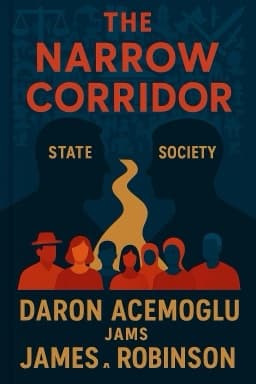
The Three Faces of the Leviathan: Why Some States Crush Liberty While Others Protect It
A deep dive into the Absent, Despotic, and Shackled Leviathans and their impact on freedom.

The concept of the Leviathan—a powerful state entity—has long fascinated political theorists. But not all Leviathans are created equal.
The Absent Leviathan is a weak or non-existent state. In such societies, law enforcement is minimal, violence runs high, and citizens rely on social norms that can restrict freedom in subtle ways. Imagine living in a place where insecurity is constant and social hierarchies dominate, limiting opportunity and liberty.
The Despotic Leviathan, by contrast, is strong but unaccountable. These states enforce order through repression and dominance. Citizens live under fear of arbitrary punishment, and political participation is often suppressed. While such states may achieve economic growth, it is usually concentrated among elites, and liberty is severely curtailed.
Between these extremes stands the Shackled Leviathan, the ideal balance where state power is strong but restrained by societal control. Here, institutions exist to hold leaders accountable, citizens participate actively, and the rule of law is upheld. This balance fosters both political freedom and economic prosperity.
Historical examples abound. Medieval European parliaments restrained monarchs; modern democracies institutionalize checks and balances. In contrast, despotic regimes and failed states illustrate the dangers of imbalance.
Want to explore more insights from this book?
Read the full book summary