
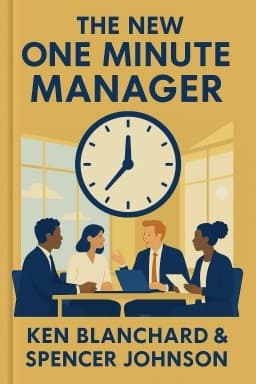
Why the New One Minute Manager Is Still Changing Lives (And Workplaces) in 2025
Discover the timeless secrets that make this classic book a must-read for leaders and teams in today’s fast-paced world.

In a world where workplace stress is at an all-time high and employee engagement is a daily challenge, The New One Minute Manager stands out as a beacon of hope and practical wisdom. This book, originally a groundbreaking bestseller in the 1980s, has been thoughtfully updated to reflect the realities of today’s fast-paced, technology-driven world. Its core message is both refreshingly simple and deeply transformative: great leadership is about investing a minute at a time in people, clarity, and encouragement.
The book is structured around three powerful secrets: One Minute Goals, One Minute Praisings, and One Minute Re-Directs. These aren’t just catchy phrases—they are actionable habits that have proven results in organizations of every size and type. The first secret, One Minute Goals, teaches leaders to set clear, concise objectives for themselves and their teams. Each goal is written down in a few sentences so that anyone can review it in about a minute. This clarity eliminates confusion, aligns priorities, and empowers employees to self-manage their progress. Imagine the difference in your workplace if everyone knew exactly what was expected of them every single day.
The second secret, One Minute Praisings, is all about catching people doing things right and letting them know, immediately and specifically. Research consistently shows that positive feedback is the most powerful motivator for employees, even more than financial rewards. When leaders take the time to recognize effort and progress, confidence grows, trust deepens, and performance soars. The book shares stories of companies where daily praise transformed not just output, but the entire culture—turning skeptics into advocates and disengaged employees into passionate contributors.
The third secret, One Minute Re-Directs, addresses the inevitable reality of mistakes. Instead of reprimanding or shaming, the best leaders use gentle, immediate feedback to help people learn and grow. The focus is always on the behavior, never the person. This approach builds psychological safety, encourages experimentation, and ensures that setbacks become stepping stones rather than stumbling blocks. The book’s shift from “Reprimands” to “Re-Directs” reflects a deeper understanding of what truly motivates people in today’s collaborative workplaces.
What makes The New One Minute Manager so enduring is its universal relevance. The secrets work not only in business, but also at home, in schools, and in communities. Parents use One Minute Goals with their children; teachers use Praisings to build classroom morale; couples use Re-Directs to resolve conflicts with compassion. The book’s parable format makes these lessons easy to remember and apply, which is why so many readers return to it year after year.
In 2025, as remote and hybrid work become the norm, these lessons are more valuable than ever. Leaders can no longer rely on proximity or authority alone—they must build trust, foster autonomy, and communicate clearly across distances. The One Minute Manager’s secrets are perfectly suited to this new reality, helping teams stay connected, motivated, and resilient.
So, if you’re looking for a proven way to inspire your team, boost morale, and achieve better results with less stress, The New One Minute Manager is the book you need. Its timeless wisdom, grounded in real-world examples and reinforced by decades of research, will help you become the kind of leader people want to follow. Start with just one minute a day, and watch the transformation unfold.
Ready to try it? Write down your top three goals. Praise someone for their effort today. And when a mistake happens, respond with understanding and guidance. These simple actions, repeated daily, will change your team—and your life—for the better.
Sources: Readingraphics book summary, LinkedIn reviews, Wrike blog review, Amazon reader feedback 1 2 4 3
Want to explore more insights from this book?
Read the full book summary