
Why You Can't Stop Watching the News (And How It’s Secretly Shaping Your Mind)
Discover the hidden psychological grip news holds on us and how it molds our emotions, fears, and hopes every day.

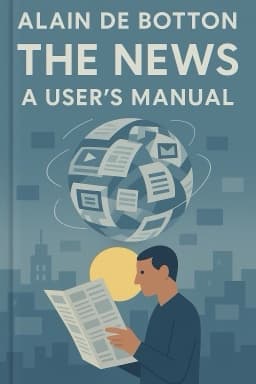
Have you ever wondered why, despite the barrage of often bad news, you find yourself glued to your phone or TV? Alain de Botton, in his compelling book The News: A User’s Manual, reveals that news is not just information—it’s a modern ritual that structures our emotional lives and worldviews.
News acts much like a secular religion, providing daily rhythms and a sense of belonging. When headlines report disasters or political chaos, we paradoxically find comfort. Why? Because these stories shift our focus from personal worries to a larger human drama, offering a strange relief.
Yet, this ritual has a complex emotional palette. Political news, for instance, often leaves us bored or frustrated due to fragmented and superficial coverage. It tends to stoke fear and anger, emotions that news outlets exploit to keep us engaged, sometimes at the cost of constructive understanding.
World news faces its own hurdles. Despite global connectivity, many people remain indifferent to foreign stories because they lack relatable context.
Economic news, with its complex jargon and abstract numbers, often alienates audiences. Yet, beneath the statistics lie real human experiences: workers facing layoffs, entrepreneurs striving for success.
Celebrity news taps into our deep psychological need for admiration and role models. Celebrities reflect societal ideals and anxieties, serving as mirrors for our values. But this fascination also comes with risks—envy and vulnerability—that require mindful engagement.
Disaster reporting reminds us of human fragility, but often lacks consolation, which could foster resilience.
Ultimately, de Botton urges us to adopt mindful news consumption. By engaging critically and emotionally aware, we can reduce anxiety and cultivate resilience.
Understanding these dynamics transforms our relationship with news from passive reception to active participation, empowering us to navigate the information age with clarity and compassion.
For more insights, check out reviews and discussions on The Guardian, reader perspectives on Goodreads, and thoughtful critiques at Washington Independent Review of Books. 1 3 4
Want to explore more insights from this book?
Read the full book summary