
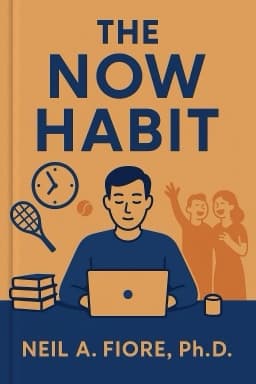
Why Procrastination Is Not Your Fault — And How 'The Now Habit' Can Set You Free
Understanding the emotional roots of procrastination and practical ways to reclaim your time and energy.

Many people beat themselves up for procrastinating, labeling themselves lazy or undisciplined. Neil Fiore’s The Now Habit challenges this narrative by framing procrastination as an emotional coping mechanism. Anxiety about failure, perfectionism, and fear of judgment cause the mind to delay tasks as a form of self-protection.
The Inner Voice That Sabotages
Negative self-talk like 'I have to' or 'I should' creates internal conflict, draining energy and motivation. Fiore advocates shifting this dialogue to 'I choose to,' which aligns intention with action and reduces resistance. This linguistic shift fosters a sense of control and personal commitment.
Play: Your Productivity Secret Weapon
Scheduled, guilt-free play is essential for restoring mental energy and creativity. The subconscious mind works on problems during leisure, leading to insights and breakthroughs. Ignoring play leads to burnout and diminished output, while embracing it creates a sustainable work rhythm.
Breaking the Cycle of Overwhelm and Fear
Tasks perceived as too large or difficult trigger stress responses that freeze action. Fiore’s strategies include breaking tasks into smaller steps, planning for setbacks, and persistent starting—even brief engagement reduces fear and builds momentum.
Helping Yourself and Others
Procrastination affects relationships. Nagging is counterproductive; instead, fostering empathy, clear communication, and autonomy helps. Setting boundaries and celebrating progress supports motivation and reduces frustration.
From Procrastinator to Producer
Transformation requires awareness, small consistent actions, and self-compassion. By adopting the Now Habit, you can rewrite your story, reclaim your time, and live with greater productivity and peace.
Sources: dansilvestre.com, shortform.com, readingraphics.com, blinkist.com 1 2 3 4
Want to explore more insights from this book?
Read the full book summary