
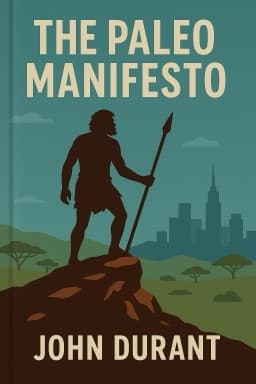
Unlocking the Secrets of Your Ancestral Health: What Evolution Teaches Us About Modern Wellness
Discover how the wisdom of our ancient ancestors can transform your health today.

Imagine a time when humans lived in harmony with nature, their bodies perfectly attuned to the rhythms of the wild. This was the Paleolithic Age, a period spanning millions of years during which our species evolved as hunter-gatherers. Our physiology, metabolism, and even psychology were shaped by this environment, yet modern life has drifted far from these ancestral roots.
One striking example comes from the study of captive gorillas. Despite vegan diets and no exposure to smoking or alcohol, many captive gorillas develop heart disease — a condition once thought uniquely human. This surprising finding underscores that diet alone is not enough; the environment and lifestyle must align with species-specific needs. When zoos switched gorillas from processed biscuits to fresh, fiber-rich produce, the animals lost weight and exhibited improved health and behavior.
Transitioning from ancient times, the Agricultural Revolution marked humanity’s shift to farming and settlement. While enabling population growth and technological progress, it introduced nutrient-poor diets and infectious diseases due to crowding and proximity to animals. Early farmers were shorter and less healthy than hunter-gatherers, illustrating the trade-offs of progress. Ancient cultural practices, like the Mosaic Law’s hygiene rules, emerged as early public health measures to combat these new challenges.
The Industrial Age further transformed human health with urbanization, processed foods, and novel diseases caused by vitamin deficiencies such as scurvy and rickets. It also expanded human exploration into high altitudes and space, revealing our biological limits and the need for technology to create livable environments. Yet, industrialization also brought pollution, overcrowding, and lifestyle diseases.
Modern evolutionary health principles offer a blueprint for restoring balance. Diets modeled on ancestral nutrition emphasize whole, unprocessed foods rich in meat, seafood, fruits, and vegetables, while avoiding grains, legumes, dairy, and processed sugars. Intermittent fasting mimics natural eating patterns and promotes metabolic repair. Natural movement—walking, running, climbing—reflects our evolutionary adaptations and counters sedentary lifestyles.
Beyond biology, food choices are deeply influenced by psychology and culture. Disgust evolved as a protective emotion shaping food taboos and social identity. Vegetarianism often reflects moral and social values, while gender differences in food attitudes highlight evolutionary pressures. Understanding these dimensions helps navigate the emotional complexities of diet and health.
Ethical and environmental considerations are paramount as we confront the realities of factory farming, pollution, and biodiversity loss. Sustainable, humane farming practices that integrate animals and land cycles offer hope for the future. Combining ancient wisdom with modern innovation, we can design habitats and lifestyles that nurture health and ecological balance.
In sum, our evolutionary heritage is not a relic but a living guide. By embracing it thoughtfully, we empower ourselves to overcome modern health challenges and craft a thriving future for people and planet alike. This journey through time and science invites you to reconnect with your roots and rediscover the path to vibrant health.
Want to explore more insights from this book?
Read the full book summary