
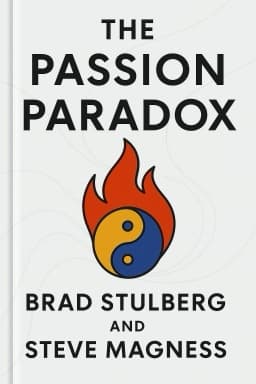
The Passion Paradox: Why Chasing Your Dreams Could Be Your Biggest Risk (And How to Win Anyway)
Unlock the hidden truths about passion that most self-help books won’t tell you.

Passion is one of those words that instantly conjures images of fire, energy, and unstoppable drive. Society tells us that to be successful or fulfilled, we must 'find our passion' and pursue it relentlessly. But Brad Stulberg and Steve Magness, authors of The Passion Paradox, challenge this simplistic view by exposing passion’s complex and often contradictory nature.
Originally, the word 'passion' meant suffering. This historical root reminds us that passion is not inherently positive; it carries the potential for both joy and pain. Biologically, passion is fueled by dopamine, a neurochemical that rewards the pursuit of goals rather than the achievement itself. This means passion can feel like an insatiable hunger, driving us forward but rarely offering lasting satisfaction.
Psychologically, passion often grows from a mixture of innate traits and life experiences, including trauma and adversity. This explains why some of the most driven individuals have histories marked by hardship. However, when passion becomes obsessive—tied to external validation or fear—it risks leading to anxiety, unethical behavior, and burnout.
So, how do we harness passion’s power without falling prey to its dangers? Stulberg and Magness advocate cultivating harmonious passion, characterized by intrinsic motivation and joy in the process rather than fixation on outcomes. They introduce the mastery mindset, emphasizing internal drive, patience, presence, and learning from failure.
Another critical element is self-awareness—developing the ability to observe your impulses, reflect on your motivations, and maintain control over your passion. Techniques such as mindfulness, journaling, and experiencing awe help widen perspective and reduce emotional reactivity.
Finally, the authors confront the myth of balance, revealing that deep passion often requires sacrifices and periods of imbalance. Instead, they propose cultivating self-awareness to navigate trade-offs consciously and incorporating deliberate rest to sustain energy.
Whether you’re just beginning your journey or struggling with passion’s challenges, understanding this paradox equips you to pursue your dreams with wisdom and resilience. The Passion Paradox is more than a book; it’s a guide to transforming passion from a potential curse into a lifelong gift.
Ready to dive deeper? Let’s explore the biological roots, psychological drivers, and practical strategies that will help you master your passion and flourish.
Sources: Goodreads review and insights, Vision.org review, Blinkist summary, Sobrief book review 1 2 3 4
Want to explore more insights from this book?
Read the full book summary