
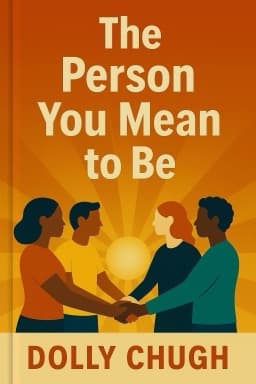
Unlocking the Power Within: How 'The Person You Mean to Be' Can Transform Your View on Bias and Inclusion
Discover the science-backed journey to becoming the person you truly aspire to be by confronting bias and embracing growth.

In a world increasingly aware of social inequities, the question arises: how do good people effectively fight bias without falling into defensiveness or despair? Dolly Chugh’s groundbreaking book, The Person You Mean to Be, offers a compelling answer grounded in science and compassion. This blog explores the core lessons of this essential read, inviting you to embark on a journey of self-awareness, growth, and courageous action.
The Growth Mindset: The Foundation of Change
At the heart of Chugh’s message is the concept of the growth mindset — the belief that one’s abilities, including moral and social awareness, can evolve through effort and learning. Unlike a fixed mindset, which sees traits as static, the growth mindset opens the door to acknowledging blind spots and embracing mistakes as opportunities for growth. This shift is crucial because it reduces the defensiveness that often blocks honest reflection on bias.
Consider a leader who initially resists conversations about diversity but chooses to listen and admit gaps in understanding. This act of humility transforms resistance into curiosity, allowing for meaningful change. Psychological safety within teams further amplifies this effect, creating environments where vulnerability is welcomed and learning flourishes.
Unmasking Ordinary Privilege
Privilege is not just about wealth or overt advantages; it often manifests as invisible, everyday benefits that shape our experiences. Chugh calls this 'ordinary privilege' — the subtle ways some people move through the world with fewer barriers. Recognizing these privileges, such as being perceived as part of the majority group or having cultural norms align with one’s identity, is essential for effective allyship.
Representation matters deeply. When people see themselves reflected in leadership and media, they feel invited to participate. Conversely, lack of representation can reinforce feelings of exclusion. Understanding privilege helps us leverage our advantages to amplify marginalized voices rather than centering ourselves.
Choosing Willful Awareness Over Ignorance
Our minds naturally filter information, leading to bounded awareness and confirmation bias — tendencies that keep us comfortable but blind us to systemic inequities. Willful awareness means choosing to confront uncomfortable truths, seek diverse perspectives, and challenge our assumptions continuously.
Imagine standing at a crossroads, one path shrouded in fog (ignorance), the other bathed in light (awareness). Choosing the latter requires courage but leads to richer understanding and empathy. Expanding social circles and engaging with diverse viewpoints break down echo chambers and open hearts.
Engaging with Courage and Compassion
Fighting bias isn’t always comfortable. It involves educating others, sometimes confronting harmful behaviors, and doing so with empathy. The 20/60/20 rule guides us to focus on the persuadable majority, conserving energy and maximizing impact.
Respectful confrontation—like addressing a biased joke with calm assertiveness—can shift social norms and reduce future occurrences of bias. Balancing empathy with assertiveness creates psychological safety and fosters inclusion.
The Power of Meaningful Support
Meaningful support is about deep listening and validating others’ experiences without centering ourselves. It eases the emotional labor often borne by marginalized groups and builds trust and solidarity.
Intergroup contact reduces prejudice by fostering genuine understanding. Allies sharing emotional labor help sustain long-term advocacy efforts, preventing burnout and strengthening communities.
Steering Conversations Toward Inclusion
Guiding dialogue with open-ended questions and a respectful tone invites reflection and reduces defensiveness. Asking 'Can you tell me more about your experience?' is more powerful than accusations, creating space for learning.
Encouraging diverse voices and gently challenging assumptions fosters inclusive environments where all feel valued. This conversational art is vital for lasting change.
Owning Our Imperfections: The Good-ish Person
Chugh reminds us that being good is not about perfection but about trying, failing, and trying again. Bounded ethicality explains how even well-meaning people have blind spots. Embracing guilt (focused on behavior) over shame (focused on self) motivates positive change.
This acceptance fuels authentic growth and connection, allowing us to persist on the path of justice and kindness.
Becoming the Person You Mean to Be
The journey culminates in a lifelong commitment to growth, small daily actions, and collective resilience. Each choice to act with integrity ripples outward, helping build a more just, inclusive world.
As you reflect on these lessons, remember: the person you mean to be is already within you, unfolding with every courageous step toward empathy, awareness, and action.
For those ready to embark on this transformative journey, The Person You Mean to Be offers both inspiration and practical guidance, making it a must-read for anyone committed to social justice and personal growth.
Sources: Dolly Chugh’s official website, Amazon book description, Goodreads reviews 1 2 3
Want to explore more insights from this book?
Read the full book summary