
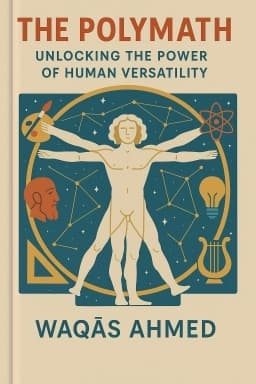
Why Being a Jack of All Trades is Better Than You Think: The Science and History of Polymathy
Unpacking the misunderstood value of polymathy through historical examples and modern neuroscience.

The common saying 'jack of all trades, master of none' carries a negative connotation, implying that breadth sacrifices depth. However, history and science tell a different story. Polymathy—the mastery of multiple fields—has been a hallmark of human progress and creativity.
Take Imhotep, the Egyptian polymath who was an architect, physician, philosopher, and statesman. His innovations in pyramid construction and medicine laid foundations that lasted millennia. Similarly, Renaissance figures like Leonardo da Vinci combined art, science, and engineering to revolutionize multiple fields. These polymaths didn’t just accumulate facts—they synthesized knowledge, creating new paradigms.
Modern cognitive science supports the value of this versatility. Our brains possess neuroplasticity, the remarkable ability to rewire and form new connections in response to learning and experience. This means that engaging with diverse disciplines enhances cognitive flexibility, allowing us to approach problems creatively and adaptively.
Unfortunately, the rise of hyperspecialization in education and work has fragmented knowledge and diminished opportunities for integrated thinking. Students are often forced to choose narrow paths early, limiting their curiosity and creative potential. This leads to disengagement and stifled innovation.
Reclaiming polymathy means fostering environments that encourage interdisciplinary exploration and holistic education. Schools that emphasize project-based learning, emotional development, and cross-subject integration are vital. By embracing the polymathic approach, we can unlock human potential and better equip future generations to face complex global challenges.
Sources: 1 , 2
Want to explore more insights from this book?
Read the full book summary