
The Secret Corridors of Power: What the Vatican Really Did During WWII
Unveiling the Hidden Diplomacy and Silent Struggles of the Vatican in the Shadow of Hitler and Mussolini

Unveiling the Hidden Diplomacy and Silent Struggles of the Vatican in the Shadow of Hitler and Mussolini
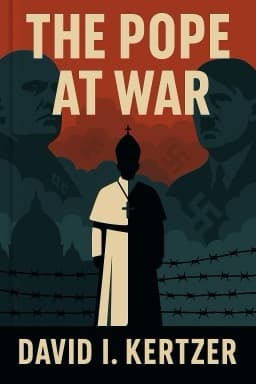
Imagine the marble corridors of the Vatican in 1939: ancient, echoing, and charged with the tension of a world about to erupt. Pope Pius XII, elected on the eve of war, steps into a maelstrom of competing demands. On one side, Mussolini’s Fascist Italy, eager for papal endorsement; on the other, Hitler’s Germany, whose anti-Semitic policies shock the world. Kertzer’s 'The Pope at War' draws us into this fraught environment, where every decision is shrouded in secrecy and every silence has consequences.
Through meticulous research in newly opened Vatican archives, Kertzer reveals clandestine meetings between Vatican diplomats and Nazi envoys. The pope’s strategy was one of neutrality, but this was not passive: it was a calculated attempt to preserve the church’s influence and protect Catholics across Europe. Yet, as the Holocaust unfolded, that very neutrality became the subject of fierce debate. Should the pope have spoken out more forcefully? Was silence complicity, or was it a desperate effort to save what could be saved?
One of the most chilling revelations is the Vatican’s focus on protecting baptized Jews, while the fate of millions of others went unaddressed. Internal debates raged, with some clergy risking their lives to shelter the persecuted, while others urged caution to avoid Nazi retaliation. The Vatican’s archives reveal letters, telegrams, and personal pleas that paint a picture of both courage and constraint. The pope’s public statements were carefully crafted, weighed against the threat that open condemnation might bring further suffering to Catholics and Jews alike.
As the tides of war shifted and Rome fell under German occupation, the Vatican became an island of neutrality in a sea of violence. Secret communications with Allied diplomats intensified, as the pope sought to shape the postwar world and protect the church’s interests. The legacy of these choices—of what was said and unsaid—continues to echo in debates about sainthood, moral responsibility, and the role of religion in politics.
Kertzer’s work is not just a history lesson; it is a meditation on the burdens of leadership, the limits of diplomacy, and the enduring challenge of conscience. The Vatican’s secret corridors of power remind us that the past is never truly past—and that the choices we make in darkness define us for generations to come.
Want to explore more insights from this book?
Read the full book summary