
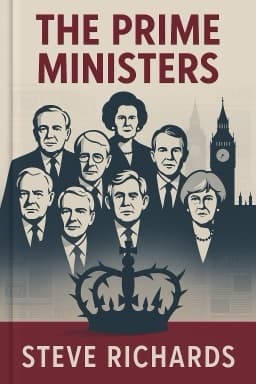
Unmasking the Thorny Crown: The Real Stories Behind British Prime Ministers' Leadership
Discover the hidden complexities and human stories behind the UK's most powerful leaders

Leadership is often simplified into neat narratives, but the reality for British prime ministers has always been far more complex. Behind the public images shaped by media and political opponents lie stories of resilience, strategic mastery, and profound human challenges. This blog seeks to peel back the layers of stereotype and reveal the true nature of leadership at the heart of UK politics.
Leadership is not merely about power; it is about managing contradictions—between party factions, economic realities, and public expectations. For instance, one prime minister widely portrayed as tired and devious was, in fact, a brilliant strategist who could shift political moods and navigate a deeply divided party with remarkable skill. This paradox underscores how public perception often misses critical nuances.
The 1970s exemplify the era's challenges, marked by soaring inflation, energy crises, and industrial unrest. Leaders had to balance competing demands through pragmatic compromises, such as voluntary pay policies disguised as social contracts. Managing a party split on Europe and economic strategy required emotional resilience and strategic patience, allowing governance despite ideological conflicts.
Communication emerged as a pivotal leadership tool. Prime ministers who excelled as political teachers, explaining complex policies with clarity and wit, built trust and enthusiasm. Wit, in particular, served as a political weapon—transforming tense moments into opportunities to engage and energize supporters.
Experience and ambition also played dual roles. Most successful leaders brought significant ministerial experience, equipping them with essential skills. Yet ambition could both drive success and create internal tensions, requiring delicate coalition-building to sustain leadership.
Context remains king in leadership. Economic crises, party divisions, and global events impose constraints that shape decisions. Strategic timing—when to call elections or referendums—can make or break a premiership. Leaders often act under pressure, obliged to appear confident while navigating uncertainty.
Media’s rise has transformed leadership challenges, demanding instant responses and continuous image management. The 24-hour news cycle and social media amplify successes and missteps alike, making media savvy a vital leadership skill.
Finally, how leaders leave office profoundly affects their legacy. Voluntary, dignified exits preserve reputation, while forced or chaotic departures can overshadow achievements. Understanding these dynamics enriches our grasp of political history and the human side of power.
These stories teach us that no leader is perfect. Leadership is a blend of character, context, and circumstance—an unpredictable human endeavor requiring empathy, communication, pragmatism, and resilience. As we reflect on these lessons, we gain not only insights into British politics but a deeper appreciation for the complexities of leadership in any field.
For those fascinated by political leadership, these revelations provide a nuanced, richly textured understanding far beyond headlines and soundbites.
Sources: The Prime Ministers by Iain Dale, NPR interview with Tony Blair, Springer’s analysis of British prime ministerial leadership 1 3 4
Want to explore more insights from this book?
Read the full book summary