
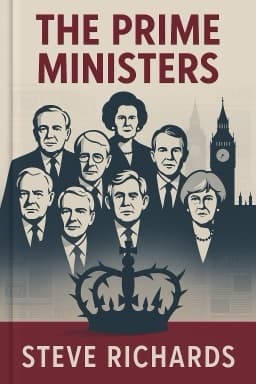
Why British Prime Ministers Are More Than Just Political Puppets: The Untold Leadership Struggles
A deep dive into the real pressures and human dilemmas behind the premiership

Popular narratives often reduce British prime ministers to simple stereotypes—either heroes or villains, puppets of circumstance or masters of power. Yet, the reality is far more intricate. This blog uncovers the untold struggles leaders endure as they navigate the thorny crown of British politics.
Managing a deeply divided party is among the greatest challenges. The Labour Party in the 1970s, split over Europe, nationalization, and public spending, exemplifies this. Leaders had to hold together rival factions, balancing ideological purity against political pragmatism to maintain cohesion and govern effectively.
Economic crises add another layer of complexity. Inflation, oil shocks, and industrial strikes constrained policy options and heightened political risk. Leaders crafted innovative yet delicate compromises, such as voluntary pay policies, to address these challenges without fracturing public support or party unity.
Communication is not just about speeches but about teaching and performance. Successful leaders act as political teachers, simplifying complex issues and connecting values to policy. Wit and humor serve as powerful tools to shift political atmospheres and disarm opponents, transforming tense moments into opportunities.
Ambition fuels leadership but can also breed rivalry and tension. Experienced ministers often bring strategic advantages, but unchecked ambition risks alienating allies. Timing and context heavily influence leadership success; even the most capable leaders are constrained by external forces and must act with strategic prudence.
The relentless media spotlight adds unprecedented pressure. The rise of 24-hour news and social media means leaders face instant scrutiny and must manage their public image continuously. Media missteps can be politically costly, while effective narrative control can bolster authority and voter trust.
How leaders leave office shapes their legacy profoundly. Voluntary, well-timed departures preserve reputation, whereas forced or chaotic exits often dominate historical memory, overshadowing achievements.
Leadership is a human endeavor marked by complexity, contradictions, and unpredictability. This understanding challenges simplistic portrayals and invites us to appreciate the resilience, skill, and humanity required to govern a nation.
By exploring these dimensions, we gain insight into the burdens of power and the enduring lessons for current and future leaders.
Sources: Goodreads review of The Prime Ministers by Iain Dale, NPR interview with Tony Blair, Springer’s study on British prime ministerial leadership 1 3 4
Want to explore more insights from this book?
Read the full book summary