
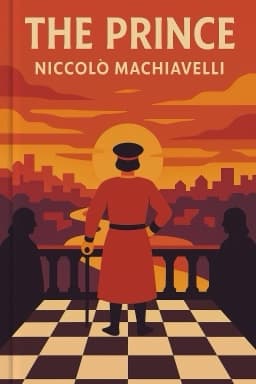
Is Machiavelli Evil? Debunking the Myths Behind The Prince
Why Machiavelli’s most infamous book is more misunderstood than you think.

For many, the word ‘Machiavellian’ conjures images of scheming villains, cold-blooded tyrants, and backstabbing politicians. But is that really what Niccolò Machiavelli intended? The answer is more complex—and more fascinating—than most realize.
When Machiavelli wrote The Prince, Italy was a patchwork of warring city-states, threatened by foreign invaders and internal chaos. Machiavelli’s goal was not to promote evil, but to help rulers survive in a brutal world. His advice is often harsh, but always pragmatic. He believed that good intentions alone were not enough to protect a state or its people.
The Prince was banned by the Catholic Church and denounced by moralists, but it was also read—and praised—by reformers and revolutionaries. Napoleon, for example, kept a copy by his bedside. Many of Machiavelli’s most controversial ideas—such as the need for cruelty, or the justification of deceit—are actually warnings about the dangers of naivety. In his other writings, Machiavelli praised republican virtues and civic freedom, showing he was not the monster his critics claimed.
So why the bad reputation? Partly, it’s because Machiavelli refused to sugarcoat the realities of power. He saw that politics often required tough choices, and that leaders who ignored this were doomed to fail. But he also believed in the importance of strong institutions, wise laws, and the public good. The real Machiavelli was a patriot, a realist, and—yes—a humanist.
Understanding The Prince means seeing past the myths. It’s not a handbook for villains, but a guide for those who want to understand—and survive—the world as it is.
References: Boston University, Medium, Stanford Daily
1
2
3
Want to explore more insights from this book?
Read the full book summary