
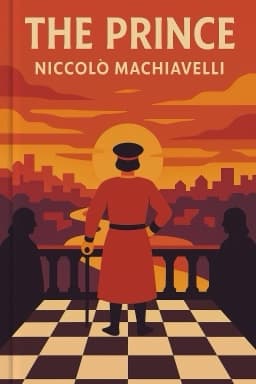
Why ‘The Prince’ Is the Ultimate Guide for Modern Leaders (And Why It Still Shocks Us)
From Renaissance intrigue to boardroom battles: How Machiavelli’s lessons still shape power today.

Few books have cast as long and controversial a shadow as Niccolò Machiavelli’s The Prince. Written in 1513, this slim treatise on power and leadership continues to captivate, horrify, and inspire. What is it about Machiavelli’s advice that makes it so enduring—and so unsettling? The answer lies in the book’s unapologetic realism, its willingness to confront the harshest truths about human nature, and its insight into the timeless mechanics of power.
At its core, The Prince is not a manual for monsters, but a mirror for leaders. Machiavelli urges rulers to accept the world as it is, not as we wish it to be. He strips away the comforting illusions of virtue and instead asks: what actually works? In an era of political chaos, Machiavelli saw that survival often depended on adaptability, cunning, and the ability to make tough—sometimes ruthless—decisions.
One of Machiavelli’s most famous (and infamous) claims is that it is better for a leader to be feared than loved—if he cannot be both. This isn’t a call for cruelty, but a recognition that love is fickle, while fear, if managed wisely, is a more reliable foundation for authority. Yet, Machiavelli warns, a prince must avoid being hated. The balance is delicate: severity may be necessary, but it must be proportional and never arbitrary.
Modern leaders, from CEOs to presidents, have often embraced Machiavelli’s lessons—sometimes too literally. The idea that perception matters more than reality is now a staple of political strategy and public relations. Social media, with its curated images and viral narratives, proves Machiavelli’s point: most people judge by appearances, not by truth. Leaders who master the art of seeming virtuous, even when making hard choices, frequently succeed where others fail.
But Machiavelli’s advice is not just about deception or manipulation. He insists that strong institutions, wise laws, and a loyal citizenry are the real foundations of lasting power. Charisma and cunning may win short-term victories, but only stability and trust can build a legacy. The Prince, then, is both a warning and a guide—a reminder that power is as fragile as it is necessary, and that those who wield it must do so with both courage and caution.
In the end, Machiavelli’s true genius is his refusal to offer easy answers. He challenges us to confront uncomfortable realities and to ask what kind of leaders we want—and what kind we are willing to accept. That’s why, centuries later, The Prince is still required reading for anyone who seeks to understand the forces that shape our world.
References: Boston University, Medium, Stanford Daily
1
2
3
Want to explore more insights from this book?
Read the full book summary