
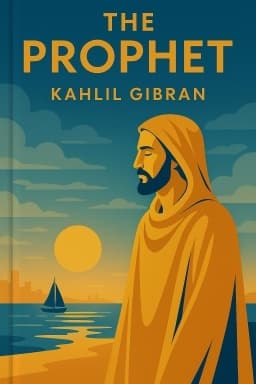
10 Life-Changing Lessons from The Prophet You’ll Never Forget
Discover the timeless truths in Gibran’s masterpiece that continue to inspire millions.

What if a single book could illuminate the deepest mysteries of your heart? Kahlil Gibran’s The Prophet has done just that for generations—offering gentle guidance, poetic wisdom, and a call to embrace all of life’s beauty and pain.
1. Love is Both Joy and Pain
Gibran’s most famous passages remind us that true love is not only blissful, but also a force that transforms us through both happiness and heartbreak. Love “crowns you and crucifies you,” he writes, urging us to accept its full range. Imagine two lovers standing beneath a blooming tree, sunlight and shadow mingling on their faces—this is the duality of love.
2. Let There Be Spaces in Togetherness
In marriage and friendship, Gibran advocates for unity without possession. “Let there be spaces in your togetherness,” he says, encouraging partners to support each other’s individuality. Picture a couple standing side by side, a gentle breeze weaving between them, their hands almost touching but not entwined.
3. Children Are Arrows, Not Possessions
Gibran’s metaphor of parents as bows and children as arrows is a powerful reminder to nurture without controlling. We may give our children love, but not our thoughts; they “dwell in the house of tomorrow.”
4. Work is Love Made Visible
Work, when done with love, becomes sacred. Whether you are baking bread or building a house, infuse your labor with devotion. Gibran’s vision turns daily toil into a spiritual act.
5. Give with Joy, Not Obligation
True generosity flows naturally, like a myrtle releasing its fragrance. Give not because you must, but because your heart overflows.
6. Embrace Both Joy and Sorrow
“Your joy is your sorrow unmasked,” Gibran writes. The deeper sorrow carves into your being, the more joy you can contain. Accepting both is the path to wholeness.
7. Build a Home That Sets You Free
Your house should be a mast, not an anchor. Create spaces that support growth and adventure, not just comfort.
8. Freedom is Found Within
Freedom is not the absence of laws, but the mastery of self. When you are truly free, even the desire for freedom fades.
9. Good and Evil Are One
Gibran challenges us to see good and evil as two sides of the same self. Compassion grows when we understand this unity.
10. Life and Death Are One
Death is not an end, but a return—like a river flowing into the sea. Accepting this brings peace and gratitude for every moment.
These lessons are not just poetic—they are practical guides for anyone seeking to live with more openness, courage, and compassion. The Prophet continues to inspire because it speaks to the universal truths of the heart. If you’re ready to transform your life, let Gibran’s words be your compass.
Sources: theinvisiblementor.com, Goodreads, Bookey
1
2
3
Want to explore more insights from this book?
Read the full book summary