
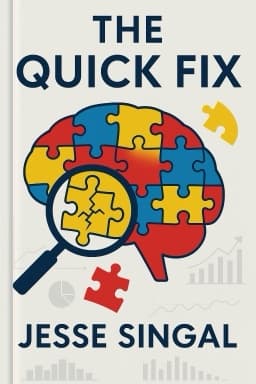
The Dark Side of Hype: How Bad Science Shapes Policy and Lives
From classroom fads to courtroom tragedies—what happens when we let fear and hype dictate our decisions?

From classroom fads to courtroom tragedies—what happens when we let fear and hype dictate our decisions?
Fear sells. In the 1990s, America was swept by panic over a new breed of youth: the so-called 'superpredators.' Headlines screamed, politicians promised crackdowns, and laws changed almost overnight. But as Jesse Singal’s 'The Quick Fix' details, the entire panic was built on a misreading of a single statistic—a classic case of bad science run amok.
The superpredator myth was more than a media story; it became a self-fulfilling prophecy. Kids—especially those of color—were branded as irredeemable and dangerous. Juvenile courts lost flexibility, and thousands of children were sentenced as adults. Years later, the architects of the theory recanted, but the damage lingered: broken families, lost opportunities, and a justice system still struggling to recover.
What makes such panics possible? It’s a mix of flawed research, media amplification, and our tendency to trust simple explanations for complex problems. When fear takes over, nuance disappears. As Singal shows, the same pattern appears in other domains: from the self-esteem craze to the rise of positive psychology, hype often trumps evidence.
The lesson is clear: policy must be rooted in facts, not fads. We need to challenge alarming narratives, ask hard questions, and listen to the communities most affected. Only then can we undo the harm and build systems that truly serve everyone.
Next, we’ll turn to the promise—and perils—of positive psychology, and what happens when hope, rather than fear, drives the science. 1 4
Want to explore more insights from this book?
Read the full book summary