
Why We Fall for Quick Fixes: The Hidden Psychology Behind Self-Help Fads
Unpacking the irresistible allure of easy answers—and why we keep chasing the next big thing.

Unpacking the irresistible allure of easy answers—and why we keep chasing the next big thing.
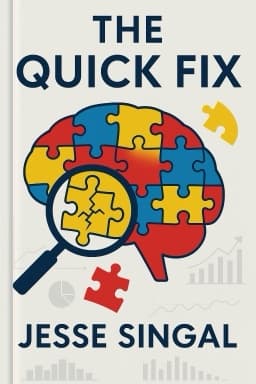
Imagine walking through a bookstore or scrolling your favorite social feed. Bright covers and bold headlines promise to make you happier, more successful, or even change your life in just a few days. Why do these promises work so well on us? The answer, as Jesse Singal’s 'The Quick Fix' reveals, lies deep in our psychology and the culture we inhabit.
Our craving for quick fixes is more than laziness—it’s a response to uncertainty and complexity. In the past, we turned to large institutions for answers, but as trust in these has faded, we’ve shifted inward, seeking personal transformation. This shift, known as the 'age of fracture,' has created fertile ground for self-help gurus and pop psychologists to flourish.
Media plays a crucial role. A single TED Talk or catchy press release can turn a preliminary study into a global sensation overnight. The story of the self-esteem movement is a prime example: California invested millions, convinced that boosting self-esteem would cure everything from crime to poor grades. Classrooms filled with Koosh balls and compliments, but later research revealed little evidence of lasting benefit. The myth persisted, however, because it felt good and was easy to implement.
This pattern repeats again and again—from the superpredator panic that reshaped juvenile justice, to the viral spread of power posing and positive psychology. Each time, a seductive narrative takes hold, offering simple solutions to complex problems. We’re drawn in by stories, not statistics; by hope, not hard evidence.
So why do we keep falling for it? Partly, it’s human nature. We’re wired to look for shortcuts and to trust what feels right, especially when we’re anxious or uncertain. But it’s also a cultural phenomenon, amplified by media, marketing, and the billion-dollar self-help industry.
The lesson is not to reject all new ideas, but to approach them with curiosity and skepticism. Ask: What’s the evidence? Has it been replicated? Who benefits from this claim? In a world full of noise, the most powerful tool is a questioning mind.
As Singal’s book shows, real change is rarely quick or easy. But by embracing humility and demanding better evidence, we can avoid the pitfalls of hype and find what truly works for us.
Ready to dig deeper? In the next post, we’ll explore the dark side of behavioral science hype—and what happens when fear, not hope, drives the story. 1 4
Want to explore more insights from this book?
Read the full book summary