
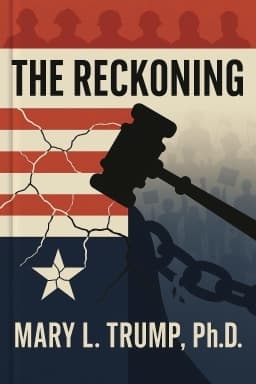
Democracy on the Brink: How Lies and Power Plays Are Shaping America's Future
Inside the alarming decline of democratic norms and the rise of political extremism in the US

In recent years, the United States has witnessed a disturbing erosion of its democratic foundations. The declaration "I alone can fix it" symbolizes a dangerous concentration of power that threatens the balance and checks essential to a healthy democracy.
The media, often caught between sensationalism and responsibility, has sometimes treated governance as a spectacle rather than a solemn duty. This has enabled falsehoods to spread unchecked, fracturing public understanding and fueling division.
The Republican Party’s transformation into a vehicle for extremist views—embracing racism, misogyny, and homophobia—has further polarized the nation. Partisan loyalty has frequently overridden democratic principles, resulting in undemocratic tactics to maintain power. The impeachment proceedings highlighted this trend, where clear abuses of power were met with political calculations that ensured acquittal, setting a precedent for impunity.
These political dynamics are not isolated from America’s racial and social history. The lingering trauma from centuries of oppression intersects with current governance failures, creating a volatile environment marked by protests, mistrust, and social fragmentation.
The media’s paradoxical role, sometimes amplifying lies while attempting to expose truth, complicates the public’s ability to discern fact from fiction. This environment demands renewed commitment to journalistic integrity and civic education.
Understanding these complex forces is crucial as the nation grapples with its identity and future. The next section will explore how the COVID-19 pandemic exposed and exacerbated these fractures, highlighting leadership failures and deepening societal trauma.
Want to explore more insights from this book?
Read the full book summary