
From Chimps to Civilization: The Great Leap That Made Us Human
How a sudden burst of creativity 40,000 years ago sparked art, music, and technology that changed everything.

Imagine a time when humans had been using simple stone tools for over a million years without much change. Then, around 40,000 years ago, everything changed in what scientists call the Great Leap Forward. Suddenly, humans began creating art, music, and sophisticated tools that signaled a new level of cognitive ability and cultural richness.
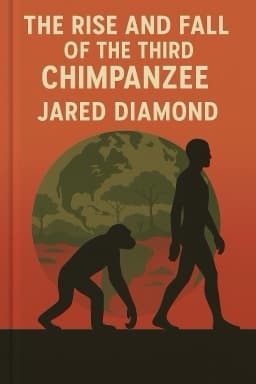
Jared Diamond paints this picture with vivid detail in The Third Chimpanzee. He contrasts the cultural stasis of Neanderthals, who despite having brains larger than modern humans, did not produce comparable art or innovation, with the explosive creativity of Cro-Magnons. The new tools were composite, combining multiple parts like spear throwers and bows, increasing hunting efficiency.
Moreover, the emergence of symbolic behavior—cave paintings, decorated beads, musical instruments—reflects advanced abstract thinking and communication. This cultural revolution allowed humans to expand rapidly, crossing water barriers to reach Australia and establishing trade networks spanning hundreds of miles.
The implications are profound. This leap represents not just technological progress but a transformation in how humans think, socialize, and relate to their environment. It set the stage for language development, social complexity, and the eventual rise of civilizations.
Understanding the Great Leap Forward helps us appreciate the fragile yet powerful spark of creativity that defines humanity. It reminds us that small changes in brain organization and social behavior can lead to monumental shifts in culture and survival.
As we reflect on this leap, we prepare to explore the biological and social peculiarities of human life-cycles that supported such cultural advancements.
Want to explore more insights from this book?
Read the full book summary