
Why Humans Have Such a Strange Childhood and What It Means for Society
Exploring the bizarre human life-cycle that shaped our social bonds and cultural success.

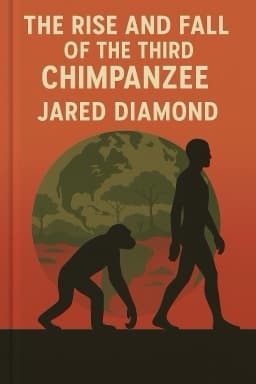
Human childhood is unlike that of any other animal. We spend many years dependent on adults for food, protection, and education. This extended childhood is a biological oddity with profound social implications. Jared Diamond’s The Third Chimpanzee explores this strange life-cycle and its evolutionary origins.
Unlike chimpanzees or gorillas, whose young quickly become independent, human children require a decade or more to acquire the skills needed for survival. This long dependency period allows for the transmission of complex cultural knowledge, language, and technology. It also necessitates cooperative breeding and biparental care, with fathers playing an active role in provisioning and protection.
Another unique feature is menopause, the cessation of female fertility well before the end of life. This phenomenon is rare in the animal kingdom and may have evolved to allow grandmothers to help raise grandchildren, enhancing their survival and thus the propagation of shared genes.
These life-history traits involve evolutionary trade-offs. Investing heavily in fewer offspring over a long time contrasts with species that produce many offspring with little care. Human longevity and social complexity are intimately linked to these reproductive strategies.
Understanding our life-cycle helps explain many aspects of human society, from family structures to social roles and cultural evolution. It also sheds light on challenges like parenting, aging, and social support systems in modern life.
Next, we will examine how these biological foundations influence human sexuality and mating behaviors, revealing the evolutionary logic behind our often puzzling reproductive strategies.
Want to explore more insights from this book?
Read the full book summary