
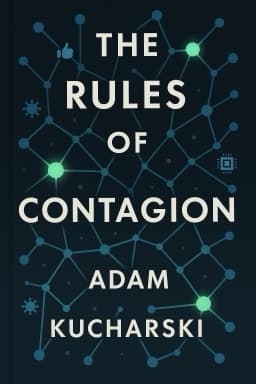
Why Your Social Media Feed Is More Contagious Than You Think: The Science Behind Viral Ideas
Discover how ideas, beliefs, and behaviors spread through your social networks, and why some posts go viral while others fade away.

Every day, your social media feed is a bustling marketplace of ideas, emotions, and behaviors competing for attention. But what makes one post or idea go viral while another barely registers? The answer lies in the fascinating science of social contagion — the process by which ideas and behaviors spread through networks of human connection.
Simple vs Complex Contagions: The Role of Social Reinforcement
Unlike infectious diseases that often require just one contact to spread, many social behaviors need multiple exposures before adoption. This phenomenon, known as complex contagion, explains why joining a new social movement, adopting a technology, or changing a belief often requires reinforcement from several trusted sources. For example, the slow but powerful spread of Feynman diagrams in physics was not due to frequent conversations but the lasting influence and repeated exposure within tight-knit academic communities.
Network Structure Shapes Contagion Dynamics
Social networks are not random; they have clusters, hubs, and varying tie strengths. Strong ties within clusters provide trust and repeated interactions necessary for complex contagions, while weak ties bridge distant groups, introducing novel information. However, without reinforcement, weak ties alone may fail to spread behaviors requiring social validation.
The Reflection Problem: Untangling Influence from Environment
Researchers face a key challenge called the reflection problem — determining whether similarities in behavior among friends arise from mutual influence or shared environments. This subtlety complicates measuring contagion but underscores the importance of context in social spread.
Misinformation and Persuasion: The Double-Edged Sword
The rapid spread of misinformation on social media highlights the darker side of social contagion. Attempts to correct false beliefs sometimes backfire, strengthening misinformation. Yet, personalized, face-to-face conversations that respect moral values and emotions can foster genuine change, demonstrating the nuanced interplay between cognition, emotion, and social context.
Harnessing Social Contagion for Good
Understanding these dynamics empowers communities, marketers, and policymakers to design interventions that promote beneficial behaviors and curb harmful ones. By fostering trusted networks, encouraging repeated positive messages, and respecting emotional undercurrents, we can shape the viral spread of ideas toward collective well-being.
Want to explore more insights from this book?
Read the full book summary