
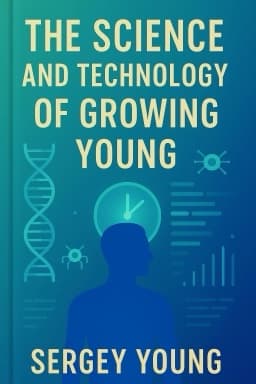
Unlocking the Secret to Living Past 200: The Longevity Revolution You Can't Ignore
Discover how cutting-edge science is reshaping the future of aging and what it means for you.

Imagine a world where your 200th birthday is just the beginning of a vibrant new chapter. This isn't a distant fantasy but a rapidly approaching reality driven by the Longevity Revolution. Modern science is rewriting the rules of aging, combining breakthroughs in genetics, regenerative medicine, and artificial intelligence to extend not only lifespan but healthspan — the years lived in good health.
Longevity Escape Velocity is the cornerstone concept here. It refers to reaching a point where medical advances add more than one year of life expectancy every year, effectively outpacing biological aging. Historically, life expectancy rose steadily due to improvements in sanitation, nutrition, and medicine, but now the pace is accelerating exponentially. This shift is fueled by technologies that target aging at its root causes, rather than treating symptoms after they appear.
One of the most exciting tools are biological age clocks, which use DNA methylation patterns to measure your body's true age versus your chronological age. These clocks allow for precise tracking of aging and the effectiveness of interventions, revealing that aging is not a fixed process but one that can be slowed or even reversed.
Genetic engineering technologies like CRISPR enable precise editing of genes, offering potential cures for hereditary diseases and cancer. Meanwhile, regenerative medicine harnesses stem cells and 3D bioprinting to repair or replace damaged tissues and organs, transforming the concept of bodily decline. Bionic augmentation further extends human capabilities, integrating robotics and electronics to restore or enhance physical function.
Wearable and ingestible diagnostic devices have ushered in a new era of proactive health monitoring. From smartwatches detecting heart irregularities to ingestible cameras scanning the digestive tract, constant health data empowers individuals and doctors to detect diseases early and personalize treatments with unprecedented precision.
Artificial intelligence plays a critical role by analyzing vast health data sets to predict disease risk, optimize drug discovery, and tailor therapies uniquely to each person’s biology — a field known as precision medicine. This data-driven approach promises to improve outcomes and reduce side effects.
However, the Longevity Revolution also raises profound ethical questions. How will society manage resource allocation if people live centuries? What about social inequality and the psychological impact of extended life? These challenges require thoughtful dialogue and policy innovation to ensure equitable access and societal harmony.
In summary, the journey to living past 200 is no longer science fiction but a scientific and technological frontier unfolding before us. By understanding and embracing these advances, we can all prepare to live longer, healthier, and more fulfilling lives.
Want to explore more insights from this book?
Read the full book summary