
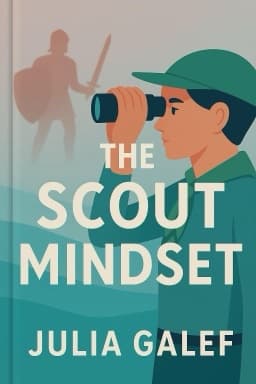
Why You’re Probably Thinking Like a Soldier (And How to Become a Scout)
Uncover the hidden forces that make you defend your beliefs fiercely and learn practical ways to think more clearly.

Have you ever caught yourself arguing passionately to defend a belief, only to wonder later if you were just protecting your ego? That’s the soldier mindset at work. Julia Galef’s The Scout Mindset brilliantly explains why our brains are wired to defend beliefs with fierce loyalty, often at the cost of truth.
Motivated reasoning is the invisible engine driving this defense. It’s an unconscious process where we selectively gather and interpret evidence to support what we want to believe. This mental shield protects us from painful emotions like regret, fear, and social rejection.
One fascinating psychological trick is the 'sour grapes' effect, where we convince ourselves that what we failed to get wasn’t worth having anyway. Conversely, the 'sweet lemons' effect helps us find silver linings in bad situations. These rationalizations preserve our morale but distort reality.
Social belonging amplifies soldier mindset. Beliefs act as badges signaling group membership. Changing or questioning them risks ostracism. This dynamic explains why people sometimes defend ideas they privately doubt and why ideological polarization is so persistent.
Recognizing soldier mindset is the first step toward change. It requires self-awareness to notice when we are defending rather than exploring. Galef offers thought experiments that challenge double standards and prompt us to consider how outsiders might view our beliefs.
Transitioning to scout mindset doesn’t mean abandoning convictions but holding them lightly and revising them when warranted. It’s a courageous act of intellectual honesty that leads to clearer thinking and better decisions.
Understanding these psychological forces empowers us to navigate conversations, debates, and personal growth with greater grace and effectiveness.
Sources: Reddit discussions on The Motte, Freddie deBoer’s review, Goodreads reader insights 2 1 4
Want to explore more insights from this book?
Read the full book summary