
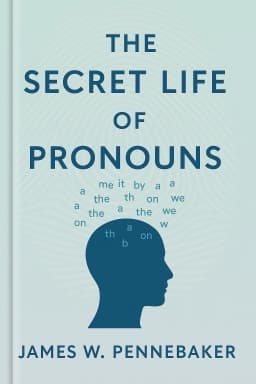
The Secret Life of Pronouns: How Your Tiny Words Shape Your World
Unveil the surprising ways your everyday words reveal your personality, emotions, and social connections.
Introduction: More Than Just Grammar
Most people overlook function words like pronouns, articles, and prepositions as mere grammatical necessities. However, these tiny words are powerful indicators of our inner lives.
Gender and Age: Language as a Social Mirror
Women use more personal pronouns and social words, reflecting a relational focus, while men use more articles and nouns, showing object orientation. Language changes with age too, becoming more formal and categorical as people grow older, with increased positive emotion words signaling emotional maturity.
Social Class and Power in Language
Language style also mirrors social hierarchy. Higher status individuals use noun-heavy, task-focused language, while lower status individuals emphasize social words and pronouns. These patterns influence how people communicate in workplaces and social settings.
Personality, Emotion, and Deception
Function words correlate with personality traits and emotional states. Expressive writing rich in positive emotion words promotes healing. Deceptive language avoids self-reference and concrete details, while truthful language is specific and grounded.
Leadership and Group Dynamics
Effective leaders use inclusive language to foster group identity and confidence. Groups with high language style matching show stronger social bonds and perform better.
Conclusion: The Language of the Soul
Function words are the secret language of the soul, revealing who we are beneath the surface. By paying attention to these tiny words, we can better understand ourselves and others, improving communication and connection.
References: Insights drawn from James W. Pennebaker’s groundbreaking research and contemporary studies in language psychology. 3 1 4
Want to explore more insights from this book?
Read the full book summary