
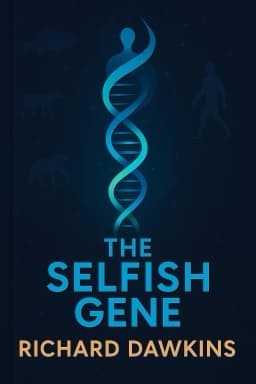
Why 'The Selfish Gene' Is More Relevant Than Ever: Genes, Memes, and the Future of Humanity
Explore how Dawkins' ideas about genes and memes illuminate the evolution of culture and what it means for our future.

Richard Dawkins’ seminal work, The Selfish Gene, did more than explain evolution from a gene’s-eye view; it laid the foundation for understanding cultural evolution through the concept of memes. These cultural replicators, transmitted by imitation and communication, evolve in ways analogous to genes, shaping human behavior, society, and even technology.
This blog explores how genes and memes interact in a dynamic coevolution, influencing each other and driving rapid changes in human evolution. While genes operate on biological timescales, memes can spread and mutate at lightning speed, enabling the accumulation of knowledge, social norms, and innovations that define human civilization.
From Genes to Memes: Extending the Replicator Concept
Memes are units of cultural information—songs, languages, rituals, technologies—that replicate by being copied from one mind to another. Like genes, memes undergo variation, selection, and replication, but their transmission is mediated by learning and communication rather than biological inheritance.
The Power and Peril of Memes
Memes have transformed human societies, enabling cooperation on large scales, the development of complex technologies, and the creation of moral and ethical systems. However, memes can also propagate harmful ideas, misinformation, and destructive behaviors, demonstrating that cultural evolution is not inherently progressive.
Gene-Meme Coevolution and Human Consciousness
The interaction between genetic and cultural evolution creates feedback loops. Cultural practices can influence genetic selection—for example, dietary habits or social structures affect reproductive success. Human consciousness and culture provide a unique platform for reflection and choice, allowing individuals to transcend genetic imperatives and shape their own futures.
Implications for the Future
Understanding the selfish gene and meme framework equips us to navigate challenges such as climate change, social cohesion, and technological disruption. By recognizing the evolutionary roots of behavior and culture, we can foster cooperation, empathy, and innovation to build a sustainable future.
In conclusion, Dawkins’ ideas remain vital for understanding the biological and cultural forces shaping humanity. They invite us to embrace our evolutionary heritage while consciously directing cultural evolution towards positive outcomes.
References: Insights drawn from Mindleap, Blinkist, Future Disruptor, and New Book Recommendation provide a comprehensive foundation for this exploration. 1 2 4 3
Want to explore more insights from this book?
Read the full book summary