
The Science Behind Serendipity: Why Chance Favors the Prepared Mind
Explore the fascinating scientific mechanisms that make serendipity possible and how understanding these can boost your creative potential.

Serendipity is not just a happy accident but a complex interplay between chance and a prepared mind. Scientific research shows that many major discoveries occur when individuals notice anomalies or unexpected results and connect them creatively to existing knowledge. This process, sometimes called 'bisociation,' involves holding multiple perspectives and making novel associations.
However, our cognitive biases often prevent us from recognizing these moments. Hindsight bias, post-rationalization, and functional fixedness limit our ability to see beyond conventional patterns. For example, hindsight bias makes past events seem more predictable than they were, causing us to underestimate the role of chance. Functional fixedness restricts how we use tools and ideas, blocking innovative leaps.
Alertness without searching—being open to noticing without a fixed goal—enhances serendipity. Neurologically, this state engages brain networks involved in insight and creative problem-solving. Curiosity and a growth mindset further prime the brain to explore and connect new information.
Scientific breakthroughs such as the discovery of penicillin or the invention of the Post-it note exemplify serendipity’s power. These events were not purely accidental but depended on prepared minds recognizing the value of unexpected observations.
Environmental factors also matter. Spaces designed for interaction and psychological safety encourage the sharing of ideas and risk-taking. Diverse social networks increase the chance of bridging unrelated fields and perspectives, multiplying serendipitous opportunities.
In sum, serendipity is a scientific phenomenon rooted in cognitive processes and social dynamics. Understanding these mechanisms allows us to cultivate the conditions for serendipity, boosting creativity and innovation in all areas of life.
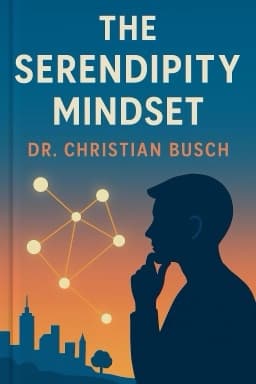
Sources: Research articles on serendipity and creativity, The Serendipity Mindset by Christian Busch, and scientific analysis of innovation.
Want to explore more insights from this book?
Read the full book summary