
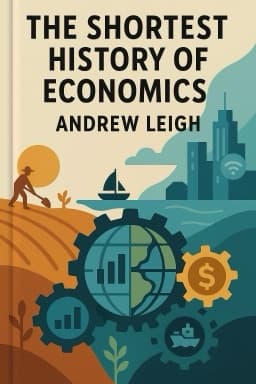
Unlocking the Secrets of Wealth: The Shortest History of Economics You Can’t Miss!
A captivating journey from ancient firelight to modern markets that reveals how economic ideas shaped our world.

A captivating journey from ancient firelight to modern markets that reveals how economic ideas shaped our world.
Imagine a world where every hour of light required hours of labor to gather wood. This was the reality for our ancestors before the Agricultural Revolution changed everything. In this sweeping narrative, we trace how early innovations like the plough not only revolutionized food production but also altered social structures, including gender roles. These early developments laid the foundation for economic specialization and the rise of complex societies.
Fast forward to the medieval era, and we see the transformative power of infrastructure like China’s Grand Canal, which connected provinces and boosted prosperity through trade. The invention of the printing press democratized knowledge, fueling literacy and economic innovation. Religious competition also played a surprising role, encouraging participation and innovation within communities.
The Age of Sail opened new horizons, connecting continents through maritime trade but also exposing the dark realities of slavery and colonial exploitation. The Dutch East India Company pioneered the modern multinational corporation, blending commerce with military power. These developments reshaped global economies and set patterns still visible today.
The Industrial Revolution unleashed unprecedented technological progress, from the spinning jenny to steam power, multiplying productivity and transforming societies. Markets began coordinating self-interest through competition, but this growth also sparked social upheaval, resistance, and the birth of labor movements.
Economic thought evolved alongside these changes. Alfred Marshall’s supply and demand model provided tools to understand markets, while institutions like the US Federal Reserve emerged to stabilize financial systems. These innovations helped manage the complexity of modern economies.
The late 19th and early 20th centuries saw migration, public health advances, and social reforms fuel further growth. Labor shortages empowered workers, while welfare programs pioneered by leaders like Bismarck set the stage for modern social safety nets.
The tumultuous 20th century brought wars, depressions, and recovery, reshaping economic policy and institutions. The Great Depression challenged classical economics and led to government intervention, while the Bretton Woods system established a framework for global cooperation.
The post-war 'Glorious Thirty' was an era of shared prosperity, but rising inequality and globalization later posed new challenges. Central banks adopted inflation targeting to maintain stability, while debates about social mobility and redistribution intensified.
Today, behavioral economics reveals the complexity of human decision-making, while climate change highlights market failures requiring urgent policy action. Technology offers both opportunities and risks, demanding thoughtful stewardship to build a sustainable and inclusive future.
In sum, this concise history is a testament to human creativity, resilience, and hope. It reminds us that economics is not just about numbers but about people, their choices, and the institutions that shape our shared destiny.
Want to explore more insights from this book?
Read the full book summary