
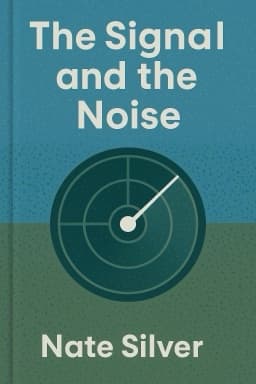
Big Data, Big Mistakes? The Hidden Dangers of Overreliance on Numbers
Why more data isn’t always better and how to avoid common modeling traps that lead to flawed predictions.

We live in a world awash with data—billions of sensors, transactions, and interactions generate vast datasets every second. The promise is clear: with enough data, we can uncover patterns, predict trends, and make better decisions. But the reality is more complicated. Data alone cannot speak; it demands interpretation, context, and critical thinking.
One major pitfall is spurious correlation—when two unrelated variables appear linked simply by chance. Without a guiding theory, big data can lead us astray, convincing us of false patterns. Another danger is overfitting, where complex models perfectly explain past data but fail to predict future outcomes because they capture noise instead of signal.
Imagine a model that forecasts stock prices flawlessly on historical data but collapses when market conditions shift. This is overfitting in action, a common trap for data scientists eager to squeeze every bit of accuracy from their models.
The antidote lies in balancing complexity with simplicity, rigorously testing models on new data, and maintaining skepticism about what data can reveal. Theory guides us to focus on meaningful relationships, while validation ensures our models generalize beyond the past.
By understanding these limitations, we can harness big data’s power without falling victim to its illusions, improving forecasts across fields from economics to healthcare.
Sources: Amazon Reviews, LSE Review of Books, Goodreads 3 1 4
Want to explore more insights from this book?
Read the full book summary