
10 Mind-Blowing Facts About The Silk Roads You Never Learned in School
From camel caravans to cultural crossroads: Discover surprising truths about the ancient Silk Roads.

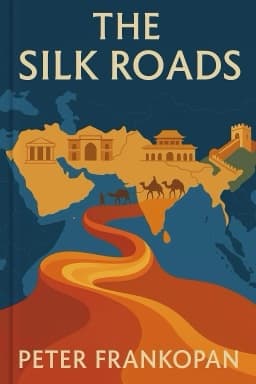
The Silk Roads evoke images of silk merchants, exotic spices, and camel caravans crossing endless deserts. But this ancient network was far more than a trade route; it was a vibrant artery of cultural exchange, religious transformation, and political intrigue. Drawing on Peter Frankopan’s groundbreaking book The Silk Roads: A New History of the World, here are ten astonishing facts that will change the way you think about these legendary routes.
- The Persian Royal Road was the ancient world's expressway. Messengers could cover 1,600 miles in just a week, enabling rapid communication that held the vast Persian Empire together.
- Buddhist statues were inspired by Greek art. The earliest depictions borrowed styles from Apollo statues, showing deep artistic exchange.
- The Bactrian camel was the ultimate desert truck. Its two humps allowed it to carry heavy loads and survive brutal conditions, making desert trade possible.
- Christianity spread deep into Asia centuries before dominating Europe. Communities flourished in cities like Merv and Kashgar, using local languages like Syriac.
- Environmental changes reshaped history. Glacial advances and Aral Sea salinity drops triggered nomadic migrations that destabilized empires.
- The Justinian plague weakened empires just before Islam’s rise. This pandemic created social upheaval that paved the way for new religious and political orders.
- Islam means peace and submission, but its rise was revolutionary. It united tribes and transformed the political landscape of Eurasia.
- Islamic empires practiced pragmatic religious tolerance. The dhimmi system allowed Christians and Jews to live and worship under protection.
- The Mongol invasions were both destructive and transformative. They disrupted trade but also connected vast regions, facilitating cultural diffusion.
- Silk was more than a luxury good—it was currency. Its value transcended beauty, becoming integral to economic systems across regions.
These facts reveal the Silk Roads as a complex, interconnected web of human endeavor, far beyond simple trade. They were the veins through which ideas, faiths, and cultures flowed, shaping the world we know today.
For a deeper dive into these fascinating stories, Peter Frankopan’s The Silk Roads offers a richly detailed narrative that rewrites world history from the East’s perspective.
Sources: Kirkus Reviews, LSE Review of Books, Kathryn Read’s blog 2 1 4
Want to explore more insights from this book?
Read the full book summary