
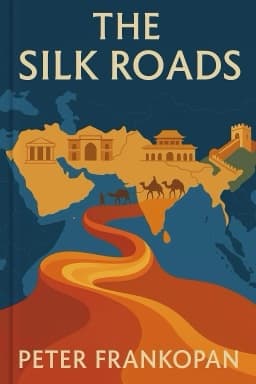
How The Silk Roads Shaped Modern Globalization: Lessons from History’s Greatest Network
Tracing the Silk Roads’ legacy in today’s interconnected world.

When we think of globalization, images of container ships, internet cables, and multinational corporations often come to mind. Yet, the roots of our interconnected world stretch back over two millennia to the ancient Silk Roads — a vast network of trade routes linking Asia, Europe, and Africa.
Peter Frankopan’s The Silk Roads reveals how these routes were not just pathways for goods but complex systems of economic, cultural, and religious exchange. The Persian Royal Road’s efficient communication, the flourishing markets under Islamic rule, and the caravanserais supporting merchants all demonstrate a level of sophistication often underestimated.
The Silk Roads helped spread not only silk and spices but also technologies like paper-making and gunpowder, religions including Buddhism, Christianity, and Islam, and ideas from philosophy to science. This diffusion created a shared cultural and economic space that resembles today’s globalized world.
Despite the rise of maritime routes, overland caravan trade persisted for centuries, especially for luxury goods requiring delicate handling and high value. The Ottomans and Timurids later revitalized these routes, controlling key junctions and fostering cultural renaissances.
Religious tolerance under Islamic empires, through policies like the dhimmi system, facilitated peaceful coexistence and economic collaboration among diverse groups, highlighting the importance of social frameworks in sustaining trade networks.
Understanding the Silk Roads’ legacy offers valuable insights into the challenges and opportunities of modern globalization. It reminds us that connectivity across cultures and continents is not new but a fundamental aspect of human history.
Embracing this long view can inspire more inclusive and resilient approaches to our global future.
Sources: The Independent, Kirkus Reviews, LSE Review of Books 3 2 1
Want to explore more insights from this book?
Read the full book summary