
Unveiling the True Heart of History: How The Silk Roads Rewrite Our Past
Discover why Peter Frankopan’s 'The Silk Roads' is the revolutionary history book changing how we see the world.

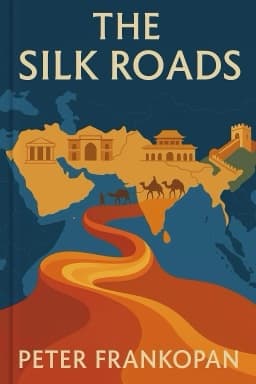
History textbooks often frame the story of civilization from a Western perspective, focusing on Europe and the Mediterranean. But what if the real story lies far to the East, along the vast network of trade routes known as the Silk Roads? Peter Frankopan’s The Silk Roads: A New History of the World offers a bold, refreshing reorientation of world history by centering on Central Asia and the connections that linked East and West across centuries.
Frankopan argues that the Silk Roads were not mere pathways for exotic goods like silk and spices but the lifeblood of empires, religions, and cultures. From the Persian Royal Road facilitating rapid communication across the vast Achaemenid Empire to Alexander the Great’s founding of cities that became cultural melting pots, the early Silk Roads set the stage for a vibrant, interconnected world. The book details how the hardy Bactrian camel enabled desert caravans to cross harsh terrains, linking distant regions in a web of commerce and exchange.
The spiritual landscape along the Silk Roads was equally dynamic. Buddhism, Christianity, Zoroastrianism, and later Islam spread, competed, and adapted along these routes, shaping societies and political power. Frankopan highlights the artistic fusion seen in early Buddhist statues inspired by Greek art and the political role of Zoroastrianism in the Sasanian Empire, illustrating the profound cultural interplay.
The book also covers the turbulent periods of environmental change and nomadic invasions, such as the Huns’ arrival, which accelerated the fall of the Western Roman Empire and reshaped Eurasian geopolitics. Yet, from these upheavals emerged new powers and faiths, most notably the rise of Islam, described as a revolutionary force that united tribes and transformed the political and spiritual landscape.
Frankopan’s narrative continues through the Islamic Golden Age, highlighting centers like Baghdad’s House of Wisdom where scholars of diverse faiths collaborated, preserving and expanding human knowledge. The book explores periods of coexistence and conflict, including the sectarian tensions that fractured empires and the Mongol invasions that, despite their destruction, facilitated unprecedented cultural exchange.
In later centuries, new empires like the Timurids and Ottomans revitalized the Silk Roads, maintaining the flow of goods and ideas. Frankopan emphasizes the Silk Roads’ role as a precursor to modern globalization, with economic, cultural, and religious ties that continue to influence our interconnected world today.
This sweeping history challenges conventional narratives, urging readers to appreciate Asia’s central role in shaping global civilization. It’s a must-read for anyone interested in understanding the true complexity and richness of our shared past.
Critics praise Frankopan’s ambitious scope and fresh perspective, while some note the book’s broad strokes sometimes sacrifice detailed analysis. Nevertheless, its impact on popular and academic views of history is undeniable.
Whether you are a history buff or a curious reader, 'The Silk Roads' opens a window onto a world where continents met, ideas flourished, and the threads of connection bound humanity long before the modern era.
Explore more about this transformative book and its insights into a global past that still resonates today.
Sources: LSE Review of Books, Kirkus Reviews, The Independent 1 2 3
Want to explore more insights from this book?
Read the full book summary