
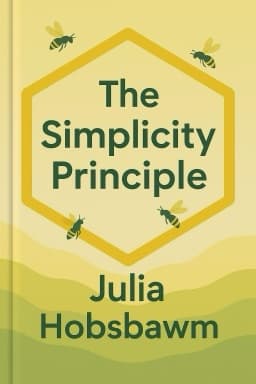
The Hidden Hexagon: How Six Simple Principles Can Change Your Life Forever
Unveil the power of the Hexagon Action framework for a balanced, purposeful life

What if the secret to mastering complexity lies in a simple geometric shape? The hexagon, found in honeycombs, snowflakes, and even Saturn’s clouds, symbolizes perfect balance and efficiency. Julia Hobsbawm’s The Simplicity Principle harnesses this metaphor in the Hexagon Action framework, which integrates six vital areas: clarity, individuality, reset, knowledge, networks, and time.
Clarity cuts through the fog of distraction, helping us focus on what truly matters. Individuality honors our unique identities and creativity. Reset ensures we recharge mentally and physically. Knowledge guides us to curate and trust information wisely. Networks build meaningful social connections. Time aligns our actions with natural rhythms.
Each side of the hexagon supports the others, creating a resilient and efficient structure. This interconnectedness reminds us that balance is not about perfection but harmony among diverse elements.
Practical steps include setting realistic deadlines, practicing digital detoxes, nurturing trusted relationships, and aligning tasks with peak energy times. Small, consistent changes — micro-steps — build habits that sustain simplicity and flourishing.
The hexagon’s cultural significance across civilizations underscores its timeless wisdom. Embracing this shape as a symbol and framework invites us to live more intentionally, creatively, and joyfully.
By adopting these six principles, you embark on a path toward a balanced and fulfilling life, where simplicity empowers rather than restricts.
Want to explore more insights from this book?
Read the full book summary