
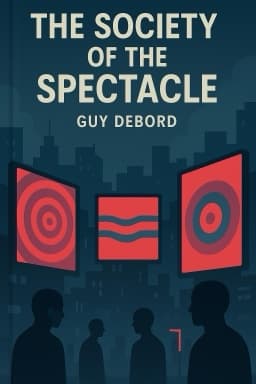
Why The Society of the Spectacle Is More Relevant Than Ever in the Digital Age
Exploring the Timeless Critique of Image-Driven Society in Today’s Hyperconnected World

When Guy Debord wrote The Society of the Spectacle in 1967, he couldn’t have foreseen the full extent of digital technologies, yet his insights resonate profoundly with today’s hyperconnected world. The spectacle, originally describing capitalism’s domination through images, now permeates social media, virtual reality, and algorithmic feeds, shaping how we perceive and interact with reality.
The spectacle today is more immersive and personalized. Algorithms curate our news, entertainment, and social interactions, creating echo chambers and reinforcing false needs. The line between reality and representation blurs as virtual identities and curated feeds replace direct experience. This intensifies alienation, making individuals both consumers and producers of the spectacle.
Consider how influencers and celebrities craft idealized personas that millions emulate, yet these images are carefully constructed illusions. Political discourse becomes spectacle-driven theater, where image management often outweighs substance. The spectacle’s totalizing ideology operates through nonstop self-praise and suppression of dissent, maintaining capitalist dominance.
However, technology also offers tools for resistance. Independent media, encrypted communication, and grassroots movements use digital platforms to challenge the spectacle’s narratives. Awareness of the spectacle’s mechanisms is the first step toward reclaiming autonomy and fostering genuine social relations.
For example, decentralized social networks and open-source projects embody alternatives to the spectacle’s centralized control. Digital activism highlights how consciousness and collective action can disrupt spectacle-driven passivity.
In sum, Debord’s spectacle theory remains a vital lens for understanding and critiquing digital society. Recognizing the spectacle’s evolution helps us navigate the complexities of media manipulation and opens pathways toward liberation.
Next, we will explore the spectacle’s impact on culture and ideology, revealing how art and discourse become battlegrounds for control and freedom.
Want to explore more insights from this book?
Read the full book summary