
Unlocking the Secret to the Best Job Ever: Why Work Should Feel Like a Calling
Discover how Seth Godin’s revolutionary ideas about significance and enrollment can transform your career and workplace.

Imagine waking up every day excited to contribute, to create, and to be part of something meaningful. For many, this remains a distant dream, trapped by the legacy of industrial-era work models that emphasize routine, control, and compliance. Seth Godin’s groundbreaking ideas challenge this paradigm, inviting us to rethink what work is truly about.
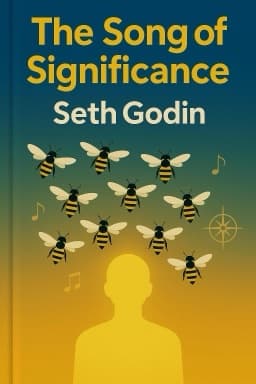
Godin introduces the metaphor of three songs — Increase, Safety, and Significance — that represent stages in organizational and personal development. The Song of Increase embodies growth and possibility, much like a honeybee swarm venturing into unknown territory to build a new hive. The Song of Safety satisfies our need for security but often leads to stagnation if it becomes the sole focus. The most profound is the Song of Significance, where work transcends mere survival and becomes a source of dignity and impact.
Traditional industrial work, born about 200 years ago, was revolutionary but now shows its limitations. It treats people as cogs rather than creative contributors, leading to disengagement and burnout. The best job ever, according to thousands surveyed, involves surprise, autonomy, respect, and building something important. These qualities align with the Song of Significance and demand a cultural shift from control to enrollment — where people choose to commit because they believe in the mission and trust their leaders.
Enrollment contrasts sharply with coercion. Instead of demanding obedience, leaders invite participation, fostering mutual respect and shared purpose. This shift requires embracing tension as a positive force — the productive discomfort that sparks creativity and change — rather than stress, which drains energy.
To sustain this culture, organizations must adopt key commitments: acting with intentionality, honoring dignity, encouraging learning from mistakes, and recognizing voluntary turnover as healthy renewal. Real skills such as empathy, communication, and strategic thinking become vital, amplifying vocational expertise and enabling teams to thrive.
Nature offers powerful examples. Honeybee democracy, where decisions emerge from peer-to-peer communication without centralized control, inspires federated, decentralized organizational systems. Culture, more than strategy, drives resilience, enabling adaptation in complex environments.
Communication and decision-making flourish when conversations are impartial and meetings purposeful, focusing on problem-solving and learning rather than status updates. Leadership transforms from command to inspiration and enrollment, with vulnerability building trust and authenticity.
Finally, embracing resistance — the natural aversion to important work — and naming organizational traps such as maximalism and anti-leadership attitudes empower teams to persist and grow. Significance is a dynamic choice, a daily commitment to courage, connection, and impact.
By integrating these insights, individuals and organizations can unlock the best job ever — a place where work feels like a calling, not a chore. The journey is challenging but deeply rewarding, offering the chance to create lasting meaning in our lives and communities.
For those ready to step into this new world of work, the path is clear: embrace significance, foster enrollment, cultivate real skills, and lead with courage. The song of significance awaits your voice.
Want to explore more insights from this book?
Read the full book summary