
Sacred Art, Music, and Architecture: Roger Scruton’s Vision of Transcendence in Culture
Discover how art and music reveal the sacred and connect us to the divine in Scruton’s profound cultural philosophy.

Art and music have long been recognized as windows into the sacred, but few thinkers have articulated their spiritual significance as eloquently as Roger Scruton in The Soul of the World. Scruton reveals how these cultural forms serve as vehicles for the transcendent, expressing meanings beyond their physical forms.
Music, according to Scruton, is pure intentionality. It is a movement in musical space that conveys tension, resolution, and relational meaning inaccessible to mere sequences of sounds. This phenomenological space allows music to communicate emotional depth and spiritual significance.
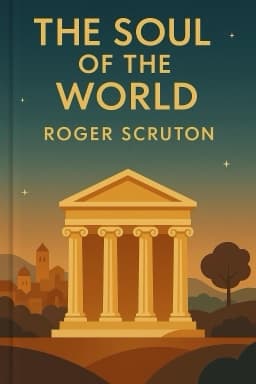
Sacred architecture, such as temples and churches, embodies divine presence and social order. These spaces mediate between the natural and transcendent realms, creating environments where individuals can encounter the sacred collectively and personally.
Scruton also highlights the human face as a powerful icon of personhood in art. The face reveals subjectivity, freedom, and interpersonal presence, communicating identity and relational depth essential to human connection.
Through these cultural expressions, Scruton shows how the sacred permeates human life, enriching our experience and connecting us to the divine. His reflections offer a profound appreciation of the aesthetic dimensions of spirituality, inviting us to see art and music as more than entertainment but as pathways to transcendence.
For lovers of art, music, and spirituality, The Soul of the World provides a compelling vision that integrates culture and faith in a meaningful dialogue.
References: Wall Street Journal review 3 , The Guardian 1
Want to explore more insights from this book?
Read the full book summary