
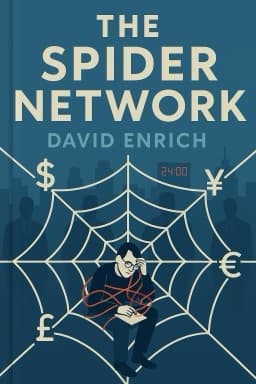
How One Number Changed the World: The Secret Story of the Libor Scandal
Discover how the world’s most important number was quietly rigged—and why it matters to you.

Discover how the world’s most important number was quietly rigged—and why it matters to you.
Imagine a number so powerful that it touched your mortgage, your city’s budget, and the fate of the global economy—yet you’d never heard its name. Libor, the London Interbank Offered Rate, was the invisible thread weaving together trillions of dollars in loans, derivatives, and financial contracts. For decades, it was trusted without question. But behind the scenes, a small group of traders and brokers found ways to nudge this number, quietly siphoning billions for themselves and their banks. The story of Libor, as told in David Enrich’s 'The Spider Network,' is not just a tale of greed and deception—it’s a lesson in how trust, once broken, can shake the very foundations of society.
At the center of this web was Tom Hayes, a math genius whose love of numbers masked deep insecurities. Hayes’s journey from awkward outsider to notorious mastermind is as much a psychological portrait as a financial thriller. Raised in a fractured family, he found comfort in the certainty of mathematics—a world where rules were clear and outcomes predictable. But on the trading floors of London and Tokyo, the lines between right and wrong blurred. Success was measured in bonuses, not ethics, and the pressure to win was relentless. Hayes’s story is a cautionary tale of how ambition, anxiety, and a culture that rewards risk at any cost can lead even the brightest minds astray.
Brokers played a pivotal role in this drama, acting as both enablers and gatekeepers. Their job was to match buyers and sellers, but their true currency was information—and loyalty. Lavish parties, coded language, and a network of favors kept the system humming, even as red flags multiplied. The normalization of manipulation was gradual, almost invisible. Each small nudge, each whispered tip, seemed harmless—until the cumulative effect became impossible to ignore.
Regulators, meanwhile, looked the other way. The UK’s 'light touch' approach to oversight relied on reputation rather than rules. Early warnings about Libor’s vulnerability were dismissed as alarmist. Understaffed and overmatched, watchdogs trusted that the system would police itself. But as the scandal grew, it became clear that self-regulation was a myth. The very institutions meant to protect the public had become complicit, whether through negligence or naivety.
The unraveling came not from within, but from the outside. Investigative journalists and courageous insiders pieced together a puzzle that regulators had missed. The headlines were explosive, the public outrage swift. Yet, for all the drama, justice was uneven. Most banks paid hefty fines, but only a handful of individuals faced criminal charges. The focus on a few scapegoats left many wondering if true accountability had been achieved.
In the aftermath, the world’s financial system began to change. Libor was phased out, replaced by new benchmarks designed for transparency and resilience. Training programs emphasized ethics, whistleblower protections strengthened, and a renewed commitment to oversight took root. But the lessons of Libor remain urgent. Finance is a world of complexity and temptation, where new risks emerge as fast as old ones are tamed. Vigilance, integrity, and a willingness to question the status quo are more important than ever.
The story of Libor is a reminder that even the most tangled webs can be undone—and that the power to rebuild trust lies within us all.
Want to explore more insights from this book?
Read the full book summary