
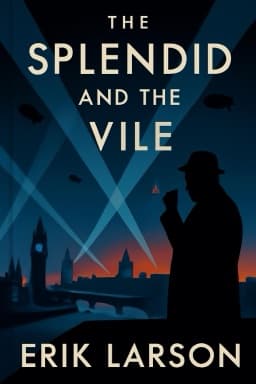
How Ordinary Londoners Became Heroes: Lessons from ‘The Splendid and the Vile’
Explore the untold stories of courage, kindness, and survival that defined a city under siege.

When we think of World War II, it’s easy to focus on leaders and generals. But Erik Larson’s ‘The Splendid and the Vile’ reminds us that the true heart of Britain’s resistance was found in the streets, shelters, and kitchens of ordinary Londoners. Night after night, as bombs fell and fires raged, families gathered in underground stations, sharing stories and biscuits, comforting frightened children, and refusing to let fear define their lives. Through Larson’s lens, we see how the city’s resilience was built not on grand gestures, but on countless small acts of kindness: a neighbor sharing tea, a fireman risking his life, a teacher keeping lessons going amid the rubble.
The government understood that morale was as crucial as munitions. Mass Observation diaries, collected from volunteers across the city, reveal the daily struggles and quiet triumphs of civilians. These records show not just fear and fatigue, but also humor, creativity, and an unbreakable sense of community. Even as homes were destroyed and loved ones lost, Londoners found ways to adapt—maintaining routines, attending church, and even dancing when the all-clear sounded.
Churchill’s radio broadcasts became lifelines, stitching together a city under siege and reminding everyone that they were not alone. Larson’s account makes clear that the Blitz was survived not by a single leader, but by a million acts of courage, compassion, and stubborn hope. In today’s world, these stories offer a powerful lesson: in times of crisis, it is community and kindness that carry us through. 1 3
Want to explore more insights from this book?
Read the full book summary