
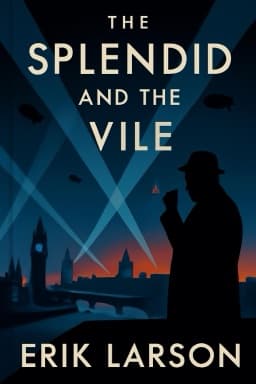
The Science That Saved Britain: Radar, Codebreakers, and the Real-Life Spies of ‘The Splendid and the Vile’
Uncover the thrilling story of how innovation, secrecy, and brainpower turned the tide of war.

History often celebrates the generals and politicians, but Erik Larson’s ‘The Splendid and the Vile’ shines a light on the quiet revolutionaries whose inventions and intellect turned the tide of World War II. In the shadowy world of Bletchley Park, mathematicians and linguists worked around the clock to break the German Enigma code—a feat that would save countless lives and shorten the war. Meanwhile, along Britain’s coast, a new technology called radar was being perfected, giving the RAF precious minutes to intercept enemy bombers and keep the skies clear.
Churchill understood the value of science in war, championing innovation and demanding results. Yet, as Larson shows, many of these breakthroughs were initially met with skepticism or outright hostility from military traditionalists. The story of radar, for example, is one of persistence and ingenuity in the face of bureaucratic resistance. The codebreakers of Bletchley Park, sworn to secrecy, could not even tell their families about their work—yet their efforts were as critical as any battle fought in the field.
The legacy of these scientific heroes is not just technological—it is a testament to the power of curiosity, collaboration, and the willingness to challenge the status quo. In a world where the next crisis may demand new kinds of solutions, their story is more relevant than ever. 2 3
Want to explore more insights from this book?
Read the full book summary