
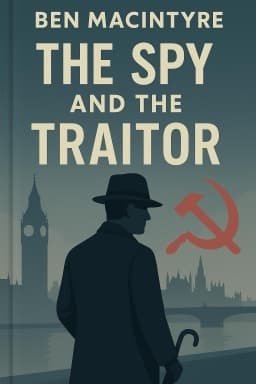
Unmasking the Ultimate Betrayal: The Chilling Story of Kim Philby and His Double Life
Dive deep into the shadowy world of Cold War espionage through the eyes of one of history’s most infamous double agents.

In the annals of espionage, few stories captivate and horrify quite like that of Kim Philby. Born into privilege, educated among Britain’s elite, and groomed for service to his country, Philby’s life took a dark and unexpected turn when he became a Soviet double agent. His story, chronicled in detail by Ben Macintyre in A Spy Among Friends, reveals the complex interplay of ideology, friendship, and deception that defined the Cold War era.
Philby’s early life was steeped in the traditions of British aristocracy, but beneath this polished exterior lay a man torn between loyalty to his country and a fervent belief in communism. His recruitment by the Soviet handler Arnold Deutsch was as much a product of ideological conviction as it was of opportunity. The Cambridge spy ring, a group of elite students turned traitors, became the nucleus of Soviet infiltration into British intelligence.
Throughout World War II and beyond, Philby’s charm and cunning allowed him to ascend the ranks of MI6, gaining access to some of the most sensitive information of the time. His ability to mask his true allegiance was aided by his disarming personality and the trust he cultivated among colleagues. Yet, this trust was a fragile illusion, shattered only decades later in a dramatic confrontation in Beirut that exposed the depth of his betrayal.
The personal cost of Philby’s espionage was immense. His closest friend and fellow intelligence officer, Nicholas Elliott, was left devastated by the revelation, embodying the human toll behind the political intrigue. The story is as much about the fragility of friendship and trust as it is about the mechanics of spycraft.
Philby’s defection to the Soviet Union sent shockwaves through Western intelligence agencies, triggering paranoia, mole hunts, and institutional reforms. The CIA’s notorious counterintelligence chief, James Angleton, became obsessed with rooting out moles, a legacy of the deep wounds left by Philby’s duplicity.
Beyond the immediate political fallout, Philby’s story raises enduring questions about loyalty, identity, and the moral ambiguities of espionage. It reminds us that behind every secret lie complex human motivations and frailties.
For those fascinated by Cold War history, spy thrillers, or the psychology of betrayal, the tale of Kim Philby remains a compelling and cautionary narrative. It is a story that continues to resonate, offering insights into the shadowy world of intelligence and the timeless complexities of human nature.
Discover more about this gripping saga and its lessons for today’s world by exploring the detailed accounts and analyses that bring this history to life.
Sources: Aspen Institute Book Review 1 , Instaread Insights 2 , The Guardian Review 3
Want to explore more insights from this book?
Read the full book summary