
From the Printing Press to Twitter: The Science Behind Viral Ideas
Why Some Ideas Spread Like Wildfire (and Others Don’t)

Why Some Ideas Spread Like Wildfire (and Others Don’t)
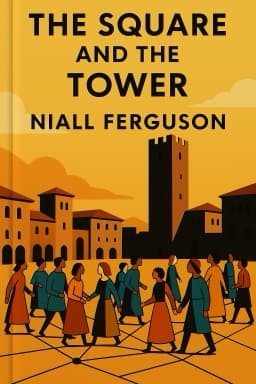
Ever wonder why some ideas catch on and others don’t? 'The Square and the Tower' by Niall Ferguson dives deep into the science of networks to reveal the answer. Ferguson shows that it’s not just the quality of an idea that matters—it’s how it travels through networks of people.
The story begins in the 15th century with the printing press. Suddenly, books and pamphlets could be copied and distributed en masse, making it possible for ideas to leap across borders. Martin Luther’s 95 Theses is a classic example: within weeks, his arguments were being read and debated across Europe, thanks to a network of printers and readers.
Network science helps explain why this happened. Concepts like 'six degrees of separation' (the idea that everyone is linked by a small number of connections) and the 'strength of weak ties' (how acquaintances, not close friends, often spread new ideas) show that networks are the secret ingredient in virality. In the digital age, a single tweet can reach millions in seconds—a phenomenon Ferguson compares to the explosion of pamphlets in the Reformation era.
But there’s a catch. Networks can also spread bad ideas, rumors, and panic. The same structures that carry innovation can amplify misinformation and fear. Ferguson warns that understanding network science is essential for anyone who wants to navigate the modern information landscape.
So, how can you make your ideas go viral? Build diverse connections, leverage weak ties, and use platforms that amplify network effects. The lessons of history—and the latest science—are clear: it’s not just what you say, but how you connect.
Understanding the science of networks is the key to thriving in the age of information overload.
References: Shortform, LSE Review of Books, Blinkist 2 1 3
Want to explore more insights from this book?
Read the full book summary