
Why Networks Rule the World: Lessons from 'The Square and the Tower'
Unlocking the Hidden Power of Connections in History and Modern Life

Unlocking the Hidden Power of Connections in History and Modern Life
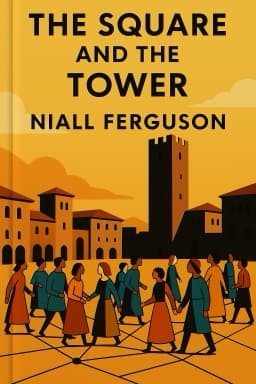
What if the most important events in history weren’t orchestrated by the mighty, but by the many? Niall Ferguson’s 'The Square and the Tower' invites us to look past the obvious centers of power—the palaces, parliaments, and boardrooms—and see the invisible networks that have shaped revolutions, empires, and even the digital world we inhabit today. The 'tower' is the symbol of hierarchy: vertical, rigid, and visible. The 'square' is the network: horizontal, flexible, and often hidden.
Consider Florence in the Renaissance. The Medici family didn’t rule by force alone; their influence flowed through marriages, business alliances, and friendships. Their network was their power.
Ferguson’s book is filled with such stories. He shows how Martin Luther’s ideas went viral thanks to the printing press—a 16th-century version of social media. The Reformation didn’t spread because of royal edicts but because pamphlets and sermons leapt from town to town via informal networks of printers and readers. This viral dynamic is echoed today on platforms like Twitter and Facebook, where a single meme or hashtag can ignite global movements in hours.
But networks aren’t always benign. Ferguson details the rise of secret societies like the Illuminati and Freemasons, whose clandestine webs of influence sparked both genuine reform and wild conspiracy theories. In the modern era, digital networks have given rise to new forms of manipulation: fake news, bot armies, and coordinated cyberattacks that can paralyze entire nations.
So, what can we learn? First, that networks are powerful because they are adaptable and resilient. Second, that hierarchies offer stability and scale, but can be slow to react. The most successful organizations—whether merchant empires or tech giants—blend both. Ferguson warns that the challenge of our time is to harness the creative energy of networks without losing the order that hierarchies provide.
In a world where a tweet can spark a revolution, understanding networks isn’t just for historians or sociologists—it’s for everyone. Ferguson’s book is an essential guide for anyone who wants to thrive in the age of connection.
In conclusion, 'The Square and the Tower' is a powerful reminder that the true drivers of history are often unseen, and that the balance between order and chaos is more relevant than ever. If you want to understand the past—and survive the future—look beyond the tower. Step into the square.
References: LSE Review of Books, Blinkist, Shortform, Deirdre McCloskey’s review PDF 1 3 2 4
Want to explore more insights from this book?
Read the full book summary