
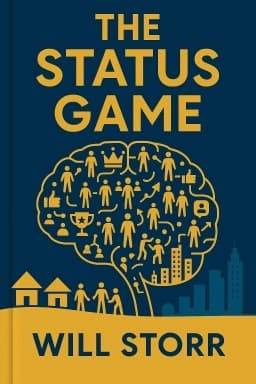
Unlocking the Hidden Game: How Status Shapes Every Moment of Your Life
Discover the invisible forces driving your actions and emotions through the lens of the status game.

Have you ever wondered why certain moments fill you with joy, pride, or crushing despair? Why social media likes can feel like lifelines, or why a slight look of disdain can pierce deeper than any physical pain? The answer lies in a hidden game we all play—a game of status. This invisible game governs much of human behavior, shaping our emotions, relationships, and even our health.
The primal roots of status stretch back millions of years, embedded in the very fabric of our DNA. Across countless premodern societies, higher status consistently meant better access to food, mates, and safety. This evolutionary imperative shaped our brains to crave approval and fear rejection. Neuroscientific studies reveal that status cues activate reward circuits in the brain, releasing dopamine and oxytocin, chemicals that feel like emotional currency.
The three faces of status—dominance, virtue, and success—offer different paths to social rank. Dominance is raw power and intimidation, often linked to aggression. Virtue is moral standing and obedience, fostering social cohesion. Success is achievement and competence, driving innovation and admiration. Each game has its own rules and rewards, and individuals often switch between them depending on context.
Consider the story of a young chef rising to Michelin-star status, celebrated for skill and creativity—that’s success. Or the religious leader who gains reverence through moral example—that’s virtue. Or the bully who commands fear through force—that’s dominance. These games coexist and collide, creating the rich tapestry of human social life.
The emotional stakes are high. Humiliation, the public stripping of status, is described as the 'nuclear bomb of emotions.' It can lead to deep psychological trauma, violence, and social exile. On the flip side, status intoxication among elites can cause arrogance, paranoia, and isolation, blinding them to reality and harming society.
History and culture have shaped how we play these games. Ancient hunter-gatherer rules still influence us, while religions institutionalize virtue games and elite competition fuels revolutions. Modern society, with its skyscrapers and social media, is the latest stage for these ancient dramas.
Understanding the status game offers practical wisdom. Awareness empowers us to engage consciously, fostering fairness, empathy, and connection. It helps us see beyond surface conflicts to the underlying drives that unite and divide us.
By unlocking the hidden game of status, we gain a profound understanding of ourselves and others—a key to living with meaning, resilience, and joy.
Want to explore more insights from this book?
Read the full book summary