
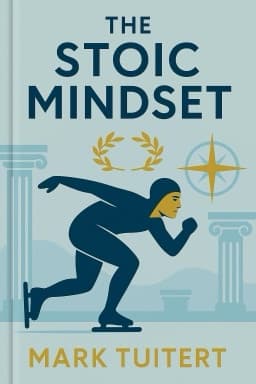
Unlocking the Stoic Mindset: How Ancient Wisdom Can Transform Your Modern Life
Discover the timeless principles of Stoicism and how they empower you to navigate life’s challenges with calm and clarity.

Imagine a philosophy that emerged from the ashes of personal loss and societal upheaval, yet continues to illuminate paths to peace and purpose today. This is Stoicism—a school of thought that originated in ancient Greece but has since inspired emperors, athletes, and modern thinkers alike. At its heart lies a simple, powerful idea:
Consider the story of a philosopher who lost his entire cargo in a shipwreck. Instead of despair, he found a new direction, founding a philosophy that teaches resilience through acceptance and reason. This mindset encourages us to see setbacks as opportunities to build strength rather than reasons for defeat.
Modern psychology echoes this ancient wisdom. The concept of 'anti-fragility'—systems that grow stronger under stress—parallels Stoic teachings on adversity. When we face challenges, our character can be forged like steel in fire.
Central to Stoicism is mastering emotions by understanding their root: our judgments. When anger or fear arises, it is not the event itself but our interpretation that fuels these feelings. By pausing and questioning our thoughts, we regain control and calm.
For example, an athlete who loses a crucial match might initially feel despair. But by reframing the loss as a learning experience, they transform emotion into motivation. This reflective practice is a cornerstone of emotional resilience.
Another profound teaching is focusing only on what lies within our control. Like an archer aiming an arrow, we can perfect our aim and release, but the flight depends on external forces beyond us. By directing energy to our choices and attitudes, we find freedom from anxiety and frustration.
Our connections with others also matter deeply. Stoicism teaches that the welfare of the community and individual are intertwined. The metaphor of bees and their swarm reminds us that what harms the group harms each member. Cooperation, justice, and mutual support are not just moral ideals but practical necessities.
Acceptance of fate, or amor fati, invites us to love life’s twists and turns. Resistance breeds suffering; love and acceptance bring peace. Stories of individuals overcoming loss and disability illustrate how embracing fate transforms hardship into a source of strength.
Reflecting on mortality sharpens our appreciation for each moment. Knowing life’s impermanence motivates us to live authentically and virtuously, focusing on what truly matters beyond fleeting pleasures and external success.
Happiness, in the Stoic view, is not a goal but a byproduct of living in accordance with virtue—courage, justice, temperance, and wisdom. It arises from the journey of growth, not the destination of achievement.
To navigate life’s unpredictability, Stoics rely on an inner compass of values rather than fixed external plans. This compass guides decisions with adaptability and integrity, ensuring resilience amid change.
Building character is the most important lifelong project. Like a craftsman shaping stone, we refine our virtues daily through reflection and deliberate practice, enabling us to respond wisely to any challenge.
Finally, action is the bridge between philosophy and life. True invincibility comes from mastering our reasoned choices and living consistently with our values. Philosophy without action remains theory; virtue is realized through deeds.
By integrating these principles, Stoicism offers a timeless toolkit for modern living—helping us face uncertainty with calm, cultivate meaningful relationships, and build a life of purpose and fulfillment.
Whether you are navigating career challenges, personal loss, or everyday stress, embracing the Stoic mindset can transform your experience. It invites you to see obstacles as opportunities, emotions as manageable, and life as a journey of growth and virtue.
Start today by reflecting on what lies within your control and practicing acceptance of what does not. Build your character with daily acts of courage and kindness. Let your actions speak louder than words, and watch as your inner peace and resilience grow.
Embrace the ancient wisdom that has guided countless through adversity and let it guide you toward a life well-lived.
Sources: Mindful Stoic, Medium articles on modern Stoicism, Reddit discussions on Stoic practice[[1]](#__1),[[2]](#__2),[[0]](#__0)
Want to explore more insights from this book?
Read the full book summary