
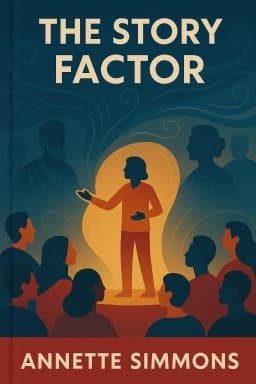
Why Facts Alone Fail: The Science Behind Story’s Persuasive Power
Unlock the Hidden Power of Narrative to Change Minds and Hearts

Unlock the Hidden Power of Narrative to Change Minds and Hearts
Imagine presenting a mountain of data to your team, only to see blank stares and empty notepads. Now imagine telling a simple story about a customer’s journey, and watching the room light up with understanding and empathy. This isn’t magic—it’s neuroscience. Annette Simmons’ The Story Factor and a wave of psychological research confirm what great communicators have always known: stories change minds, while facts alone often bounce off.
Why do stories work? When we hear a narrative, our brains don’t just process the words; they simulate the experience. Brain scans show that stories activate regions associated with sight, sound, movement, and emotion. This means listeners are not just hearing—they’re feeling and imagining. In contrast, facts and statistics usually light up only language-processing centers. No wonder stories are more memorable and persuasive.
Stories also bypass resistance. When people feel threatened or pressured, their defenses go up. But a story invites them to step into another world, to see through someone else’s eyes. Simmons shares examples of leaders who overcame stubborn opposition not by arguing, but by sharing stories that gently reframed the issue. One executive, facing a skeptical team, told a story about his own doubts and eventual breakthrough. The team related, and their resistance melted away.
Perhaps most importantly, stories give meaning to facts. Data is neutral until we interpret it. A story provides context, emotion, and a reason to care. Simmons describes how a struggling nonprofit turned around donor engagement by sharing stories of real lives changed, rather than just listing numbers. The result? Donations soared, and volunteers felt renewed purpose.
If you want to persuade, inform, or inspire, start with a story. Use facts to support your narrative, not the other way around. The next time you prepare a presentation or pitch, ask: What story will make these facts matter?
References: The Story Factor by Annette Simmons; Bookey review; Sobrief.com summary. 1 4
Want to explore more insights from this book?
Read the full book summary