
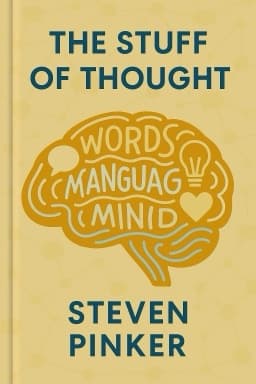
Why Words Matter: The Hidden Power of Language in Shaping Our World
Explore the unseen forces behind everyday words and their impact on truth, identity, and society.

Language is often taken for granted as a simple tool for communication, but its true power lies in shaping our perception of truth, identity, and social reality.
Take factive verbs like "know" and "learn." These verbs implicitly guarantee the truth of their complements, binding speakers to their claims. In politics, such subtle linguistic choices can influence public trust and historical narratives. For example, a leader’s use of "learned" versus "was told" can change how statements are perceived and judged.
Names function as rigid designators, referring to the same individual regardless of changing descriptions. This semantic stability is crucial for identity, legal systems, and social trust. The concept of causal chains explains how names maintain reference through time, a principle that underlies everything from identity verification to historical scholarship.
Language also carries emotional weight, particularly through taboo words that activate ancient brain circuits linked to primal emotions. These words hold a special status in society, regulated by cultural norms and legal frameworks. Understanding the neurological basis of profanity sheds light on why taboo language persists and how it affects social interaction.
Beyond truth and emotion, language is a social tool that negotiates power and politeness. Indirect requests, face-saving strategies, and veiled threats are linguistic mechanisms that help maintain social harmony and respect. These subtle cues require social intelligence to interpret and use effectively.
Metaphor plays a foundational role in how we conceptualize abstract ideas, grounding them in physical experience. Expressions like "putting the past behind us" or "looking forward" reveal how spatial metaphors permeate thought and language, shaping our understanding of time, states, and change.
Children’s acquisition of verb patterns illustrates the mind’s cognitive flexibility, balancing rule generalization with sensitivity to exceptions. This learning process reveals the intricate relationship between language structure and conceptual framing.
Finally, conversation itself is a complex negotiation involving recursive mental states and social cues. Every utterance is layered with meaning, intention, and social context, making language a dynamic and powerful force in human relationships.
By understanding these hidden powers of language, we gain insight into how words shape not just communication but our very reality. For deeper exploration, consider foundational texts like "Semantics and Cognition" and
Want to explore more insights from this book?
Read the full book summary