
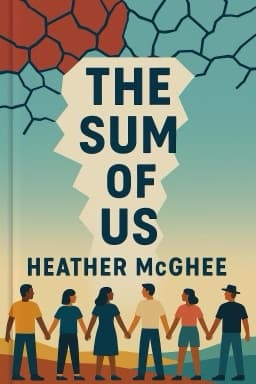
The Shocking Truth About Public Goods and Racism in America — From Pools to Hospitals
How racial animus has drained public resources and what that means for all of us.

When we think about racism, it is often in terms of discrimination or social injustice. But Heather McGhee’s The Sum of Us reveals a deeper, systemic problem: racism has caused widespread disinvestment in public goods, harming all Americans. One of the most striking examples is the history of public swimming pools. Rather than integrate these spaces, many white communities chose to close them entirely, depriving themselves and others of vital recreational and social resources.
This pattern repeats across education and healthcare. State funding for public colleges has declined dramatically, pushing students—especially students of color—into heavy debt burdens. Medicaid expansion, which could save rural hospitals and improve health outcomes, has been blocked in many states due to racialized political opposition.
These losses are not abstract. They translate into fewer opportunities, worse health, and fractured communities. McGhee’s work challenges us to see how racial animus has created a zero-sum game where everyone loses. Yet, the book also points to a hopeful path forward through the Solidarity Dividend, where shared investment in public goods benefits all.
Understanding this history is essential for policymakers, activists, and citizens who want to build a more equitable and prosperous society. It calls for renewed commitment to public goods as a foundation for democracy and justice.
Sources: 1 , 4 , 3
Want to explore more insights from this book?
Read the full book summary