
Why Adam Smith’s Moral Sentiments Matter More Than Ever in Today’s Economy
Explore the hidden ethical foundations that keep markets fair and societies just, from the father of economics himself.

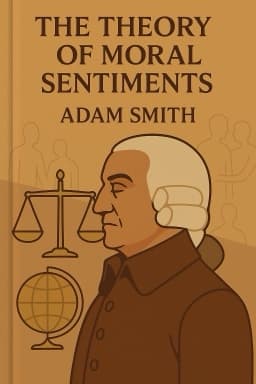
Adam Smith is often hailed as the father of modern economics, yet his economic theories cannot be fully understood without appreciating his profound moral philosophy. In The Theory of Moral Sentiments, Smith lays the ethical groundwork underlying market behavior, revealing that self-interest alone does not drive economic life.
Smith famously states that it is not from the benevolence of the butcher or baker that we expect our dinner, but from their regard to their own interest. This self-love motivates specialization and trade, creating wealth. However, unchecked self-interest can lead to social harm. Here, sympathy, justice, and prudence act as vital counterbalances.
The impartial spectator — an internalized moral viewpoint — helps individuals judge their actions fairly, fostering trust and cooperation essential for markets to function. Moreover, markets alone are insufficient; institutions like courts, schools, and public services are necessary complements to ensure justice and social welfare.
Smith’s integrated vision reminds us that economics is deeply embedded in ethical and social contexts. Modern challenges like economic inequality, financial instability, and erosion of trust call for renewed attention to these moral foundations.
By embracing Smith’s insights, policymakers, businesses, and citizens can work towards economic systems that are not only efficient but also just and humane, promoting prosperity that benefits all.
For those interested in the intersection of economics and ethics, further reading and analysis of Smith’s work provide rich perspectives on how morality shapes markets and society.
Want to explore more insights from this book?
Read the full book summary