
Why Slowing Down Is the Secret to a Happier Life (And Science Agrees!)
Discover the Transformational Power of Mindful Living—Backed by Wisdom and Modern Research

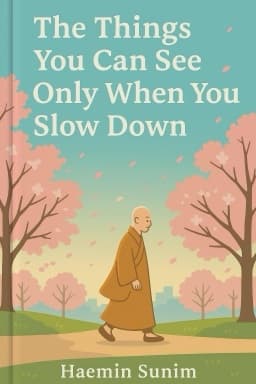
In today’s hyper-connected, always-on culture, many of us wear busyness like a badge of honor. Yet, as burnout rates climb and anxiety becomes a global epidemic, more and more people are asking: is there a better way? Haemin Sunim, a renowned Buddhist teacher and author, answers with a gentle but powerful message in his bestselling book, 'The Things You Can See Only When You Slow Down.' The book’s premise is simple but profound: when you slow your pace, you begin to see the beauty, wisdom, and peace that were always there—hidden beneath the noise. 1
Sunim’s wisdom is not just spiritual but practical. He invites readers to pause before reacting, to savor small joys, and to notice the present moment. The science backs him up: studies show that mindfulness practices reduce stress, enhance creativity, and improve relationships. Slowing down helps us tune into our bodies, regulate our emotions, and make wiser decisions. For example, research at Harvard found that people who practice mindfulness report greater happiness and resilience—even during difficult times.
But what does slowing down look like in real life? It might mean turning off notifications, taking a mindful walk, or simply drinking your morning tea without distractions. Sunim’s book is filled with relatable stories—like the executive who rediscovered joy by spending time with his family, or the student whose anxiety melted away through mindful breathing. Each story reminds us that peace is not something to be found; it’s something to be uncovered, moment by moment.
Slowing down also transforms our relationships. Sunim uses the metaphor of a fireplace: sit too close, and you get burned; too far, and you miss the warmth. Healthy relationships require both closeness and space, and mindfulness helps us find that balance. By being truly present with others—listening without judgment, offering kindness without expectation—we create deeper connections and more meaningful lives. 2
Even our productivity benefits from a slower pace. Contrary to popular belief, multitasking makes us less effective. When we focus on one thing at a time, our work improves and our stress decreases. Sunim’s advice to 'do less, but more deeply' echoes the findings of productivity experts and neuroscientists alike.
Ultimately, 'The Things You Can See Only When You Slow Down' is more than a book—it’s an invitation to change your life. By embracing stillness, befriending your emotions, and practicing gratitude for the ordinary, you can cultivate a sense of well-being that endures through life’s ups and downs. So, the next time you feel overwhelmed, remember: the secret to happiness might just be to slow down, breathe, and look around.
References: 1 , 3 , 4
Want to explore more insights from this book?
Read the full book summary