
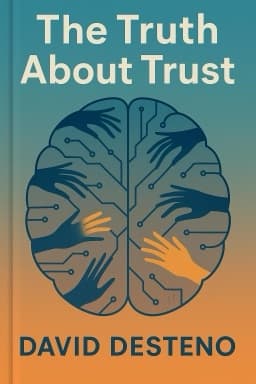
Unlocking the Hidden Power of Trust: Why It’s the Ultimate Life Hack
Discover how trust shapes your relationships, career, and well-being in ways you never imagined.
Trust is the invisible thread weaving through every human interaction, yet it often operates beneath our conscious awareness.
At its core, trust is a gamble — a willingness to be vulnerable based on the expectation that others will act in our interest or at least not harm us. This simple yet profound act of vulnerability forms the foundation of human social life. Imagine the countless daily decisions where we must decide whether to trust a colleague, a partner, or even ourselves. Each choice shapes our path forward.
Scientific studies have shown that trust is deeply embedded in our biology. The vagus nerve, a key part of our nervous system, regulates our ability to feel safe and engage socially. This system evolved to enable mammals, including humans, to form close bonds and cooperate. For example, a mother calming her infant activates this system, fostering attachment and a sense of security. Such biological underpinnings reveal why trust is not merely a cultural construct but a natural human capacity.
From infancy, trust guides learning and development. Children instinctively prefer to learn from adults who demonstrate competence and familiarity, highlighting trust’s role as a filter for knowledge. Secure attachment styles further enhance trust, enabling children to explore the world with confidence. These early experiences lay a foundation for lifelong social connections.
In adult relationships, trust is dynamic and fluctuates with emotions and context. It creates positive illusions that help partners forgive faults and maintain intimacy. Interestingly, jealousy, often seen as destructive, can serve a protective function by motivating behaviors that preserve trust and loyalty.
Yet trust faces challenges in the realms of power and money. Power can corrupt by fostering self-reliance and dishonesty, while money primes a mindset of independence that reduces cooperation. However, mindful leadership that cultivates empathy and fairness can counteract these negative effects, sustaining trust in organizations and communities.
Detecting trustworthiness in others is a subtle art. We rely on clusters of nonverbal cues—like posture, gestures, and facial expressions—that our intuition rapidly interprets. This unconscious processing often outperforms deliberate analysis, though deception complicates matters by masking true signals.
Finally, trusting ourselves is perhaps the most challenging form of trust. Self-deception and temporal biases undermine our ability to keep promises to our future selves. Recognizing the internal conflict between present impulses and long-term goals is key to cultivating self-trust and personal growth.
Embracing the complexity of trust empowers us to build stronger relationships, create cooperative communities, and live more authentic lives. It is not a static trait but a living force requiring care, insight, and courage to nurture. As you move forward, consider how trust shapes your world and how you can harness its power to transform your life.
References and further reading: The Truth About Trust on Amazon, Greater Good Science Center article, Blinkist summary 1 3 2
Want to explore more insights from this book?
Read the full book summary